


General Contractor What It Really Costs: What McKinney Homeowners Pay in 2026
A GC who charges 20% of total project cost makes more money every time the project gets more expensive. That’s not a character flaw – it’s how the arithmetic works. Knowing which fee structure your contractor uses tells you whose interests line up with yours. In 2026, McKinney homeowners pay a general contractor somewhere between 15% and 25% of hard construction costs, or a flat management fee, or a cost-plus markup – and the gap between those three methods can swing a $90,000 kitchen by five figures. If you’d rather have the number in writing than work it out yourself, call (844) 834-0609.
What are the three ways a general contractor charges in McKinney?
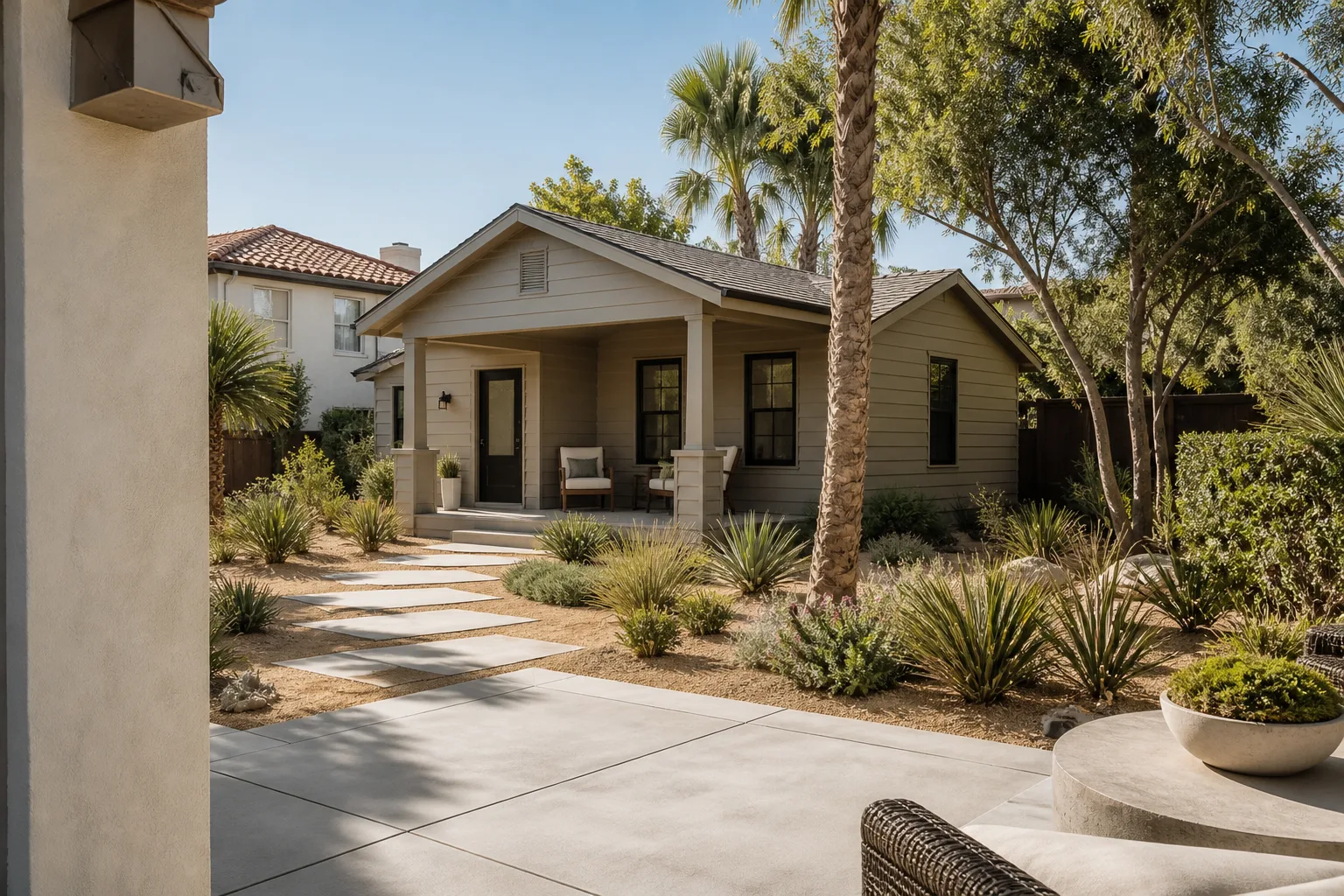
Every general contractor in McKinney quotes one of three ways. The number on the page matters less than which method produced it, because each one builds in a different incentive.
- Percentage of project cost. The GC charges 15% to 25% of the total hard costs. This is the most common structure in Collin County for whole-home work. The catch is built into the math: as the scope grows, so does the fee. Nobody’s being greedy, but when your contractor recommends upgrading the countertop and adding a pantry, those suggestions carry a commission.
- Cost-plus markup. You pay material and labor cost plus a fixed markup, usually 10% to 20%. This is transparent if the invoices are open-book and you see them. It gets murky when the markup applies to change orders, because a change order now pays the GC twice.
- Flat fee or management fee. A fixed dollar amount regardless of final cost. On a $60,000 bath this might run $9,000 to $14,000. This structure puts the GC on your side of scope debates: a change order is more work for them without more fee, so they usually push back on the ones that don’t matter. The risk is a fee too low to cover real supervision, which is where corners get cut.
Which one we use comes down to project type. Straightforward kitchens and baths in McKinney tend to work best on a flat fee with a written scope. Complex structural work on a 1990s Stonebridge Ranch home, where you don’t fully know what’s behind the drywall until it’s open, tends to suit cost-plus with the markup disclosed up front. Either way, you get the number in writing before a tool comes out.
What does a general contractor cost in McKinney in 2026, by project type?
Here are real 2026 ranges for McKinney, drawn from what projects actually close at rather than what’s quoted at first contact. These cover the GC’s fee and management, not the full construction budget.
| Project type | Typical total project cost | GC fee range |
|---|---|---|
| Kitchen remodel (mid-grade, 150-250 sq ft) | $48,000 – $85,000 | $7,000 – $17,000 |
| Bathroom remodel (full gut, hall bath) | $18,000 – $38,000 | $3,500 – $8,000 |
| Primary bath with moved plumbing | $35,000 – $65,000 | $6,000 – $13,000 |
| Room addition (250-450 sq ft) | $95,000 – $180,000 | $14,000 – $36,000 |
| Whole-home remodel (1,800-2,800 sq ft) | $150,000 – $340,000 | $23,000 – $68,000 |
Those ranges are tighter than most because McKinney’s subs are clustered. A plumber, electrician, and tile setter are all within a fifteen-minute drive of most of the city, which keeps mobilization costs down compared to outlying Collin County acreage. What drives your number to the top of the range is rarely the GC fee. It’s substrate condition, whether walls are load-bearing, and how many trades have to touch the same room. A kitchen where the sink stays put costs meaningfully less than one where you move the rough-in two feet.
For a sense of what each scope looks like in practice, our Kitchen Remodeling in McKinney page breaks down the line items we actually bid.
What does GC overhead actually pay for?

Homeowners often ask why they’re paying a management fee when they could hire trades directly. Here’s what that fee covers on a McKinney job.
- Insurance. General liability and workers’ comp. On a $100,000 project this is a real line, not a rounding error.
- Permit pulling and inspection coordination. McKinney’s building department runs on scheduled inspections. A job with a plumbing rough-in, electrical rough-in, framing, and final requires four separate inspection windows, and somebody has to be on site for each one.
- Sub coordination. Sequencing a kitchen means concrete countertop templating can’t happen until cabinetry is set and level. If the order gets scrambled, you lose a week.
- Job site supervision. A superintendent walking the job daily, catching the framing that’s two inches out before the drywall hides it.
- Material procurement and staging. Ordering KraftMaid cabinetry, confirming lead times, receiving deliveries, and storing them without damage.
- Warranty reserve. Money set aside to fix what fails in the first year.
The single biggest hidden cost in that list is supervision. A GC making $9,000 on a $60,000 bathroom can’t afford to put a superintendent on the job daily. The trade-off shows up six weeks later as a tile pattern that doesn’t line up or a shower that drains toward the wrong corner. Every completed project we hand over carries the 365-Day Done Right Promise: if the work fails inside that first year, we come back and fix it at no charge. That guarantee only stays solvent if the fee is set honestly on the front end.
How do you compare two bids that look completely different?
Two McKinney bids, same project, $52,000 and $41,000. You’d naturally lean toward the cheaper one. Before you do, line the two documents up line by line, because they’re rarely bidding the same scope.
A detailed written bid should itemize every one of these:
- Demolition scope and dumpster cost, listed separately
- Permit cost, with the GC’s name on the permit
- Allowances for tile, fixtures, cabinetry, with currency amounts – not “builder grade”
- Labor by trade: framing, plumbing, electrical, drywall, tile, paint
- Material brands and model numbers. American Standard vs. a name you don’t recognize on the toilet matters, and Toto with a washlet is a different bid than a standard bowl.
- Job site cleanup and final walkthrough terms
- Change order policy: how it gets priced, when it gets signed
- Warranty terms spelled out in writing
The $41,000 bid almost always hits bottom by using a $6,000 allowance for cabinetry and a $10/sq ft allowance for tile. Once you pick real material, those allowances blow through and the bid climbs past $52,000. It’s not dishonesty. It’s just that the first number they told you was never the number.
One more thing to check: Schluter waterproofing in a shower is a line item on a bid that will last. If it’s missing from the cheaper one, the tile setter will be setting over greenboard, and that shower is on a five-year clock, not a thirty-year one.
What does the cheapest bid actually cost McKinney homeowners?

We’ve seen it play out more times than we’d like. The low bid wins, work starts, and by week three the change orders start landing. A 2024 whole-house job we came in second on, over in Tucker Hill, was originally bid at $148,000. It closed at $211,000 after a framing surprise that had been flagged in the other bid and a “forgotten” line for exterior soffit repair. That’s $63,000 in change orders the homeowner didn’t plan for.
The patterns repeat:
- Missing line items become change orders. Permit, dumpster, and demo are the three most frequently dropped from a low bid. All three are mandatory.
- Allowance overruns. A $3,000 tile allowance on a 60 sq ft shower floor covers nothing.
- Rework cost. A failed shower pan means demo, waterproofing, and re-tile. Roughly $4,000-$7,000 on a McKinney hall bath. The discount you got on the original bid just went negative.
- Delay cost. Every additional week of work is another week of eating out and living around a construction site. On a kitchen that’s $300-$600/week in the real world.
- Vanishing contractor. A GC who underbid by 20% often can’t afford to finish the job in order. The crew shows up on Tuesday and then isn’t seen for three weeks.
The math is not subtle. The cheapest bid is rarely the cheapest project.
When should you call a pro rather than manage the job yourself?
Homeowners ask us whether they can act as their own GC and hire each trade directly. On a cosmetic refresh – paint, flooring, a light fixture swap – it’s workable if you have the time. The tipping point comes when the project involves any of the following:
- Moving plumbing rough-in or electrical service
- Load-bearing wall changes
- Adding square footage that requires permits and inspections
- Waterproofing in a wet area
- Coordination of four or more trades in the same room
At that point, self-managing means becoming your own superintendent, warranty provider, and liability holder. Most homeowners discover they’ve effectively taken a part-time job for eight weeks and lost the warranty protection a real GC provides. Every job we run closes with a clean site, a documented scope, and a signed written guarantee in your hand. That hand-off is what you’re actually paying a GC for.
If your project is in the bathroom, our Bathroom Remodeling in McKinney page details how we handle the plumbing, waterproofing, and inspection sequence. For anything larger – additions, structural work, full-home scope – our General Contractor in McKinney page is where that conversation starts. And our Bradford Remodeling Co McKinney home page has the short version of how we operate.
Why does the fee structure matter as much as the fee?
Here’s the honest version of the point we opened with. Percentage-of-cost billing isn’t wrong. Plenty of good contractors use it, and it fairly compensates them for the extra supervision a bigger project requires. But it creates a structural conflict: their fee grows when your project grows. A cost-plus markup has the same shape. Only a flat fee puts the contractor on your side of the scope conversation.
When we quote a McKinney project, the fee structure matches the scope uncertainty. Kitchen and bath jobs with defined scope get a flat fee and a written price before work starts. Structural work with real unknowns gets cost-plus with the markup disclosed up front and any change order itemized and signed before work continues. Either way, the price doesn’t move at the door. In our experience, homeowners who know which fee structure they’re buying make better decisions about which bid to accept.
The Bottom Line
Three takeaways from 2026 McKinney pricing:
- GC fees in McKinney run 15%-25% of hard costs on percentage-based billing, or a flat fee that typically nets out to a similar dollar amount on well-scoped jobs.
- The fee structure determines whose interests align with yours on scope. Flat fee protects you from upsell. Percentage and cost-plus reward the contractor for expansion.
- The cheapest bid costs more at the finish line – not always, but often enough that change-order overruns and rework are the rule rather than the exception.
Every bid we produce is a written price before work starts, itemized line by line, with brand names and model numbers on it. Every completed job carries the 365-Day Done Right Promise, in writing, with our name on it. Our technicians have up to 22 years of experience and arrive background-checked and in uniform, and the phone gets answered by a live person around the clock. If you’re in McKinney and need a general contractor quote, Bradford Remodeling Co McKinney offers free estimates – call (844) 834-0609.
Frequently Asked Questions
Most general contractors in McKinney charge 15% to 25% of total project cost, or a flat management fee that typically runs $7,000 to $17,000 on a kitchen and $3,500 to $8,000 on a bathroom. The percentage method is the most common, but on a $90,000 kitchen the difference between a 15% and 25% fee is $9,000, so it’s worth asking which structure the contractor uses. Call (844) 834-0609 for a written quote – estimates are free.
Not if the bid was honest. A written bid with real allowances, itemized scope, and a disclosed change-order policy holds its price through completion. What causes change orders is missing scope: unfound permit costs, made-up allowances, and structural surprises that should have been flagged during the site inspection. When a change is genuinely required, it should be priced and signed before work continues. Call (844) 834-0609 to have your project quoted in writing.
Yes. A licensed GC pulls the permit in their own name, coordinates every inspection, and is on site to walk the building department through each stage: plumbing rough-in, electrical rough-in, framing, and final. A contractor who asks you to pull the permit as the homeowner is handing you the liability and the warranty burden. A proper bid lists permit cost as a line item, not as an afterthought. Call (844) 834-0609 to get a permit-inclusive bid.
A hall bathroom gut typically runs four to six weeks. A kitchen remodel runs six to ten weeks with cabinetry on a standard lead time. Whole-home scope runs four to seven months depending on structural work and inspection scheduling. The single biggest variable is not construction speed; it’s how quickly decisions get made on allowances. Every selection made before demolition starts is a week saved. Call (844) 834-0609 to get a written timeline alongside your bid.
Written by the team at Bradford Remodeling Co McKinney.
Need Construction Help?
Call Bradford Remodeling Co McKinney - the local pro we connect you with is licensed and insured, here with fast after-hours help in McKinney.
(844) 834-0609