Last updated November 18, 2026







Free written scope consultation - allowances, timeline, and change-order rules on paper before a single trade is scheduled
Seasonal Construction Care for McKinney: Year-Round Homeowner’s Guide
McKinney averages roughly 79 days above 100°F a year, and since 2011 the city has been through three separate freeze events severe enough to burst pipes across Collin County. If you’re maintaining your home on the national spring-and-fall calendar that most guides publish, you’re out of phase with the stress your house is actually under. North Texas doesn’t hand you four tidy seasons. It hands you a long, UV-brutal summer, a violent hail window, a drought that cracks the soil, and then a hard freeze that finds every exposed pipe. This guide sequences the work to that real calendar.
Styles & brands we work with
- Kitchen remodeling
- Bathroom remodeling
- Home additions & ADU
- Roofing
- Windows & doors
- Driveway & pavers
- Fence
Quick Answer
In McKinney, the highest-value seasonal construction care runs on a North Texas rhythm: pre-freeze pipe and exterior prep in November and December, a post-storm inspection sequence during the March – June hail window, caulk and composite-decking checks before summer UV peaks, a foundation watering schedule through the drought-to-rain transition, and an HVAC and filter-load review in October. Skipping one phase usually shows up as damage in the next.
Table of Contents
- Why McKinney’s Climate Calendar Beats the Generic One
- Pre-Freeze Prep: Pipes, Slab Construction, and the Collin County Exposure Profile
- Hail Season (March – June): The Inspection Sequence Before You File a Claim
- Summer Heat: Composite Decking, Vinyl Trim, and Caulk Joints Under UV Stress
- The Drought-to-Rain Transition: Soil Saturation and Foundation Heave
- Fall HVAC Transition: Why McKinney’s Swing Season Loads Your Filters
- Winter Exterior: Siding, Soffit, and Door Seals
- Common Mistakes to Avoid
- When to Call a Professional
- Frequently Asked Questions
- The Bottom Line
Why McKinney’s Climate Calendar Beats the Generic One
The generic maintenance advice you’ll find online assumes a slow temperature ramp: mild spring, warm summer, cool fall. McKinney doesn’t work that way. Summers hit hard and stay, with stretches above 100°F that bake caulk and stress anything plastic or composite. The hail window opens in March and closes around June, and it can drop golf-ball hail on Stonebridge Ranch one afternoon and leave Adriatica untouched. Then fall arrives late and cool, our second-longest season, and it’s the swing season where the HVAC does most of its annual work. Winter brings the freeze risk.
Here’s the practical consequence: most homes in McKinney get maintained on the wrong clock. Homeowners caulk in April, right before the summer UV starts degrading it. They check gutters in fall when the real load is spring pollen and summer storm debris. They water the foundation in spring after the rain has already come, instead of through the dry stretch that actually causes movement.
We’ve seen this pattern repeated enough that we sequence our own seasonal guidance around five phases, and the phases don’t line up neatly with the four seasons:
- Pre-freeze (November – December): pipe exposure, exterior seals, hose bibs.
- Hail window (March – June): post-storm inspection and documentation.
- Peak UV (June – August): caulk, decking, and trim before failure, not after.
- Drought-to-rain transition (August – October): foundation soil management.
- Swing season (October – November): HVAC filter load and refrigerant checks.
Each phase targets a different building system, which is why skipping one creates damage in the next. A burst pipe in January isn’t a January problem. It’s a November one. Foundation heave in October traces back to how you managed the soil in August. Think of the guide as a sequence, not a checklist. If you’d like the construction side of this handled under one written scope, our Bradford Remodeling Co McKinney home page lays out how that works.
Pre-Freeze Prep: Pipes, Slab Construction, and the Collin County Exposure Profile
Most homes in McKinney sit on slab foundations, which changes how pipe freeze risk actually works. In slab construction, the supply lines run through or under the slab and up through walls, so the most vulnerable section is usually the run inside an exterior wall cavity or an unconditioned garage wall, plus the hose bibs and any exposed attic or crawl penetration. Insulating a whole house doesn’t help if the one exposed length stays exposed.
What actually prevents burst pipes is a short list of targeted interventions. In our experience across Collin County homes, these are the ones that matter:
- Hose bib freeze protection: remove hoses, shut off interior valves on frost-free bibs if installed, and fit insulated covers. A frost-free bib that’s been left connected will hold water in the barrel and crack.
- Exterior wall pipe insulation: foam sleeves on any supply line that runs through an exterior wall cavity, especially on north- and west-facing walls where wind-driven cold concentrates.
- Attic and garage penetrations: pipes crossing unconditioned attic space or running along a garage wall need insulation and, where feasible, heat tape. This is where slab-construction homes most often fail.
- Drip strategy: during a hard freeze, a slow drip on the furthest fixture keeps water moving through the line, which is often enough to prevent a burst. This is a mitigation, not a fix, and it depends on the rest of the envelope being sound.
One caution, and it matters: this is prep work, not DIY pipe surgery. If you’re opening walls to access a supply line, or if a pipe has already burst or frozen solid, stop and call a licensed plumber. The risk of water damage from a bad repair exceeds the cost of the call. And if a freeze event has already caused visible water intrusion or damage to drywall, trim, or framing, that’s the point where structure enters the picture. A General Contractor in McKinney is the right first call to scope the repair, because freeze damage often hides behind the finish.
Do the exterior side of freeze prep at the same time: walk the perimeter, confirm that any exterior penetrations, vents, and door bottoms are sealed, and check that the soffit hasn’t pulled loose. A gap at the soffit is a cold-air path into the attic, and in a slab home that’s where your pipes live.
Hail Season (March – June): The Inspection Sequence Before You File a Claim
North Texas hail season runs March through June, and in McKinney that window is not theoretical. Hail of a half-inch to an inch and a half hits somewhere in the metro most springs. The mistake most homeowners make is calling the insurance company before they’ve documented the damage. Once you file, you’re working from whatever evidence the adjuster collects, and the sequence below is how you protect your own claim.
- Wait until the storm has fully passed and it’s safe to walk outside. Never go up on a roof during or right after a hail event.
- Photograph from the ground first. Gutters, downspouts, window screens, siding, and any visible roof edge. Timestamp everything.
- Check the ground-level systems: A/C condenser fins (hail dents them and reduces efficiency), window and door screens, vinyl trim, and any exterior light fixtures.
- Note interior signs: water stains on ceilings or attic-facing walls can indicate a breached shingle or flashing. Photograph those too, with a reference object for scale.
- Get a professional roof inspection before you file. A contractor can tell you whether you have a legitimate claim (granule loss, bruising, cracked shingles) versus cosmetic scuffs that don’t justify a deductible.
- Then call your insurer with the documentation in hand.
The reason sequence matters: your deductible is fixed, but what gets approved is not. Documented damage with a professional report gets a scope. Undocumented damage gets argued about. We’ve seen McKinney homeowners accept a partial settlement because they couldn’t show the full extent of the damage after the fact.
One more thing specific to this climate: James Hardie fiber cement siding holds up better than most products to hail impact, which is part of why we specify it on exterior work. But hail can still mar the finish and crack the caulk lines. Inspect the caulk joints after every hail event above a quarter-inch, because water gets behind siding through failed joints before it shows up inside.
Summer Heat: Composite Decking, Vinyl Trim, and Caulk Joints Under UV Stress
McKinney’s UV load is not a footnote. With 79 days a year above 100°F and intense direct sun, materials that perform fine elsewhere degrade faster here. The three most common summer failures we see are composite decking that’s been neglected through a full UV cycle, vinyl trim that’s gone brittle and cracked, and caulk joints that have failed at the siding-to-window and siding-to-trim transitions.
The intervention timing rule is simple: address these in late spring, before peak UV, not in late summer when the failure has already happened.
- Composite decking: clean and reseal per the manufacturer’s spec each spring. Composite doesn’t rot like wood, but UV exposure oxidizes and fades the surface, and neglected boards can chalk. A warp or a cupped edge means the substructure or fasteners need a look, not just a clean.
- Vinyl trim: inspect for cracking at nail heads and corners. Vinyl expands and contracts through McKinney’s temperature swing, and fasteners driven too tight will crack the piece over a season or two.
- Caulk joints: the failure is almost always at the bond edge, not the middle. If the caulk is peeling at the top or bottom of the joint, water is already getting behind it. Remove and replace the whole joint; don’t caulk over the top of a failed bead.
If your composite decking or exterior trim is more than a decade old and showing faded, chalking, or cracked surfaces, that’s the point to plan a replacement rather than patch it. Therma-Tru and James Hardie products, which we install, carry manufacturer specs and warranties that back up the finish. That matters because a product with a written spec is a product you can hold to account.
The Drought-to-Rain Transition: Soil Saturation and Foundation Heave
McKinney’s clay soil shrinks when it’s dry and swells when it’s wet. Through a drought summer, the soil under a slab foundation pulls away from the edge, and the slab relaxes downward. Then the fall rains arrive and the soil rehydrates and swells, sometimes pushing back up unevenly. That back-and-forth is what causes the cracks in brick veneer, the sticking interior doors, and the diagonal drywall cracks that show up in September and October.
The intervention that actually helps is a consistent watering schedule through the dry stretch, so the soil never fully desiccates and the transition is gentle rather than abrupt.
- Start watering the foundation perimeter in late June, not in August when you notice the cracks. Soaker hoses set 12 to 18 inches from the slab edge work best.
- Water deeply but not daily. A long, slow soak twice a week keeps the soil consistently moist rather than saturated and then dry. Daily light watering wets only the top inch.
- Watch the transition forecast. When a big fall rain system is coming, taper the watering a couple of days before. You want the soil to meet the rain near its normal moisture level, not oversaturated.
- Check the grade and gutters. Water that pools at the foundation after a rain is doing the same swelling damage. Confirm gutter downspouts discharge at least 4 to 6 feet from the slab, and that the grade slopes away.
If you’re seeing stair-step cracks in brick or doors that stick seasonally, get a structural assessment. Cosmetic drywall cracks are common; brick cracks that propagate and doors that won’t close are not. That’s a scope-of-repair conversation for a general contractor, and the General Contractor in McKinney page covers how we handle structural evaluations.
Fall HVAC Transition: Why McKinney’s Swing Season Loads Your Filters
Fall in McKinney is our swing season, and it’s the second-longest. Days swing from the 80s down to the 50s and back up within the same week, which means the HVAC runs in both heat and cool modes, often several times in a single day. That cycling loads the filter heavier than a steady-state summer or winter run, because the system is pulling in pollen, dust, and the first leaf drop through both the heating and cooling air paths.
What that means in practice:
- Check the filter every 30 days through October and November, not every 90. A filter loaded with pollen and dust restricts airflow and drives up compressor amp draw, which is the opposite of what you want going into a cooler season.
- Have the refrigerant charge checked before the first heating call, ideally in October. A system that ran hard through a 79-day summer may have a low charge, and a low charge in heating mode will stress the compressor through the winter.
- Clear the outdoor condenser and condenser pad. McKinney’s fall leaf drop fills condenser fins and clogs the pad. A dirty condenser in shoulder season works harder than it should on the cool cycle, and the debris becomes a fire risk when it collects near the unit.
Filter load and refrigerant checks are the two interventions with the highest return. Neither requires specialty tools, and both are cheap compared to a compressor replacement. If the system is older than 15 years and showing both low charge and short cycling, the honest conversation is about replacement scope, not repair.
Winter Exterior: Siding, Soffit, and Door Seals
Winter exterior care in McKinney is mostly about sealing the building envelope, and the order matters. Siding and soffit go first because a soffit gap is a cold-air path into the attic, and in slab homes your pipes live in the attic. Door seals go next because a Therma-Tru door is only as good as its weatherstripping, and failed weatherstrip lets wind-driven cold into the wall cavity behind the door.
Walk the perimeter in November and check:
- Soffit and fascia: pulled fasteners, gaps at corners, and any loose or cracked piece. This is a cold-air entry point and a pest entry point.
- Siding joints and penetrations: caulk any joint or penetration that has failed. James Hardie siding performs well in cold but the caulk line at the joints and penetrations is the weak link.
- Door bottoms and weatherstrip: a visible daylight line under an exterior door is a heat-loss line. Replace the weatherstrip and the door sweep.
- Exterior vents and dryer vent flap: a flap that doesn’t close fully is a cold-air leak and a rodent entry.
Most of this is inspection and caulk work. If you’re replacing a full section of siding or a soffit run, that’s a construction scope, not a maintenance task, and it belongs in a written plan with the materials specified up front. KraftMaid and Wellborn cabinetry, James Hardie, and Therma-Tru all carry manufacturer specs and warranties, and we specify them on projects where a documented, traceable material matters. That traceability is part of how the work gets held to a written standard.
Common Mistakes to Avoid
- Following a generic spring/fall maintenance calendar in McKinney. The UV window and the hail window both peak before the national calendars tell you to do anything. You’ll do the right work, just months late.
- Filing a hail claim before documenting the damage. Photographs and a professional inspection before the call are the difference between a full scope and a partial settlement.
- Letting foundation soil dry all the way through summer. Starting the soaker hoses in August is starting a month too late. Begin in late June and water deeply twice a week.
- Caulking over a failed bead instead of removing it. A bead peeling at the bond edge is already letting water in. New caulk over old caulk fails the same way within a season.
- Skipping the pre-freeze pipe inspection on a slab home. The most common failure in McKinney freeze events is an exposed attic or garage wall run, not a main supply line. The one line you don’t check is the one that bursts.
- Running a dirty HVAC filter through the fall swing season. McKinney’s swing season cycles heat and cooling repeatedly, which loads the filter faster than either steady season. Thirty-day changes, not ninety.
- Watering the foundation right before a big rain. If you keep watering through the rain event, you oversaturate the clay and drive the heave damage you were trying to prevent.
When to Call a Professional
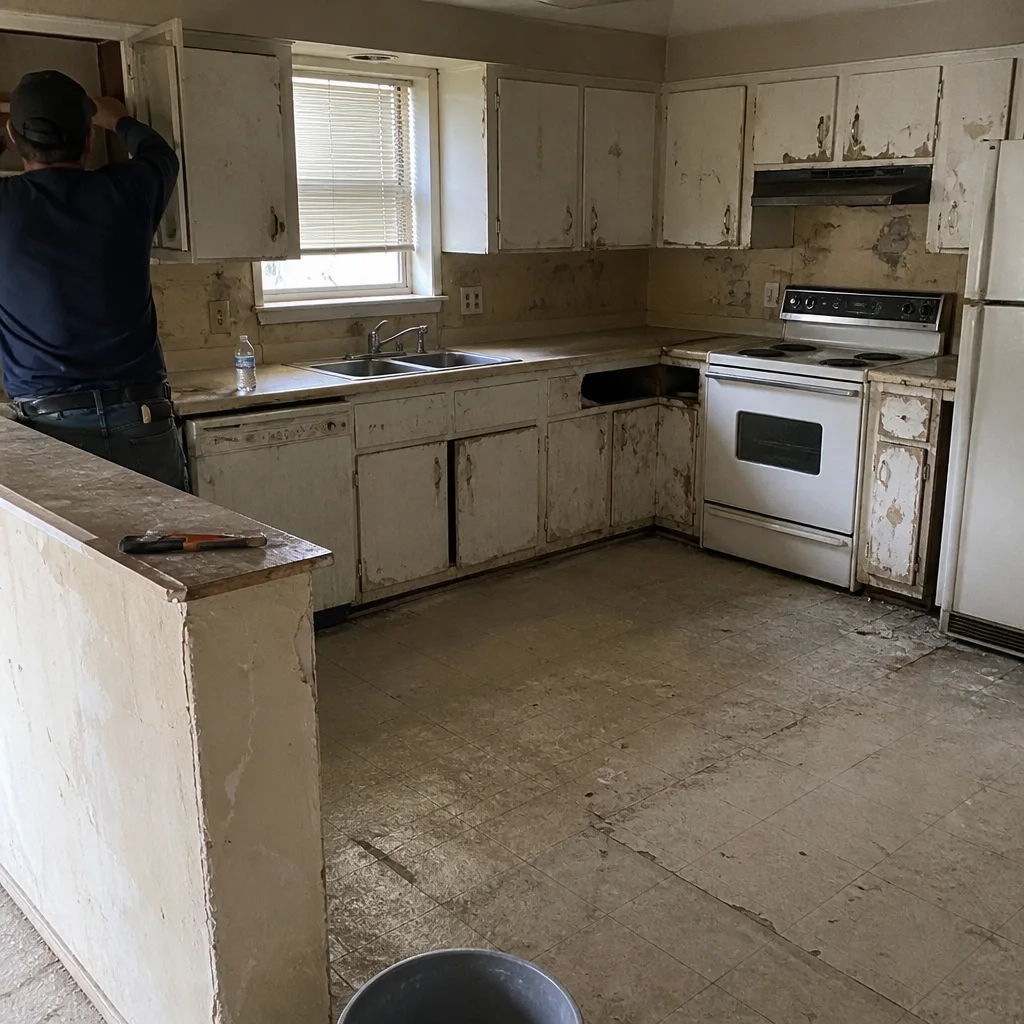
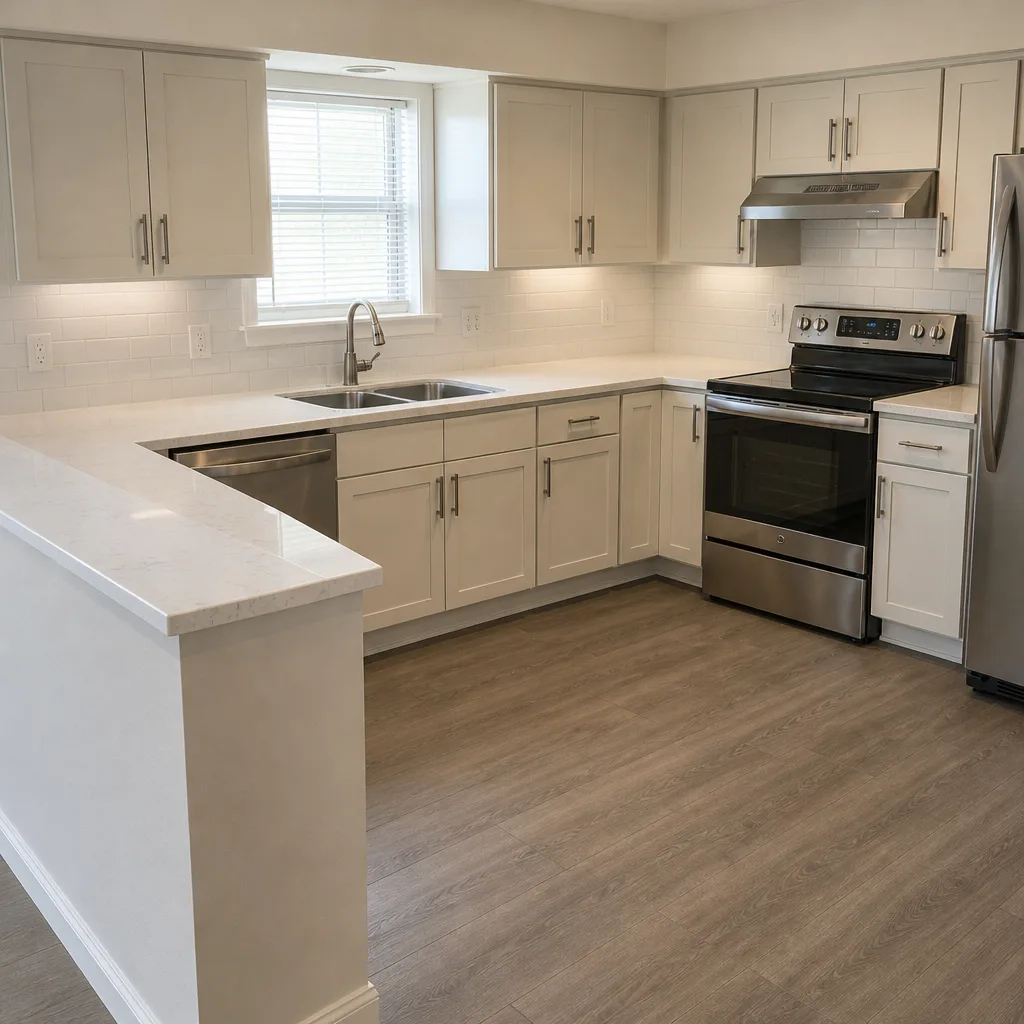
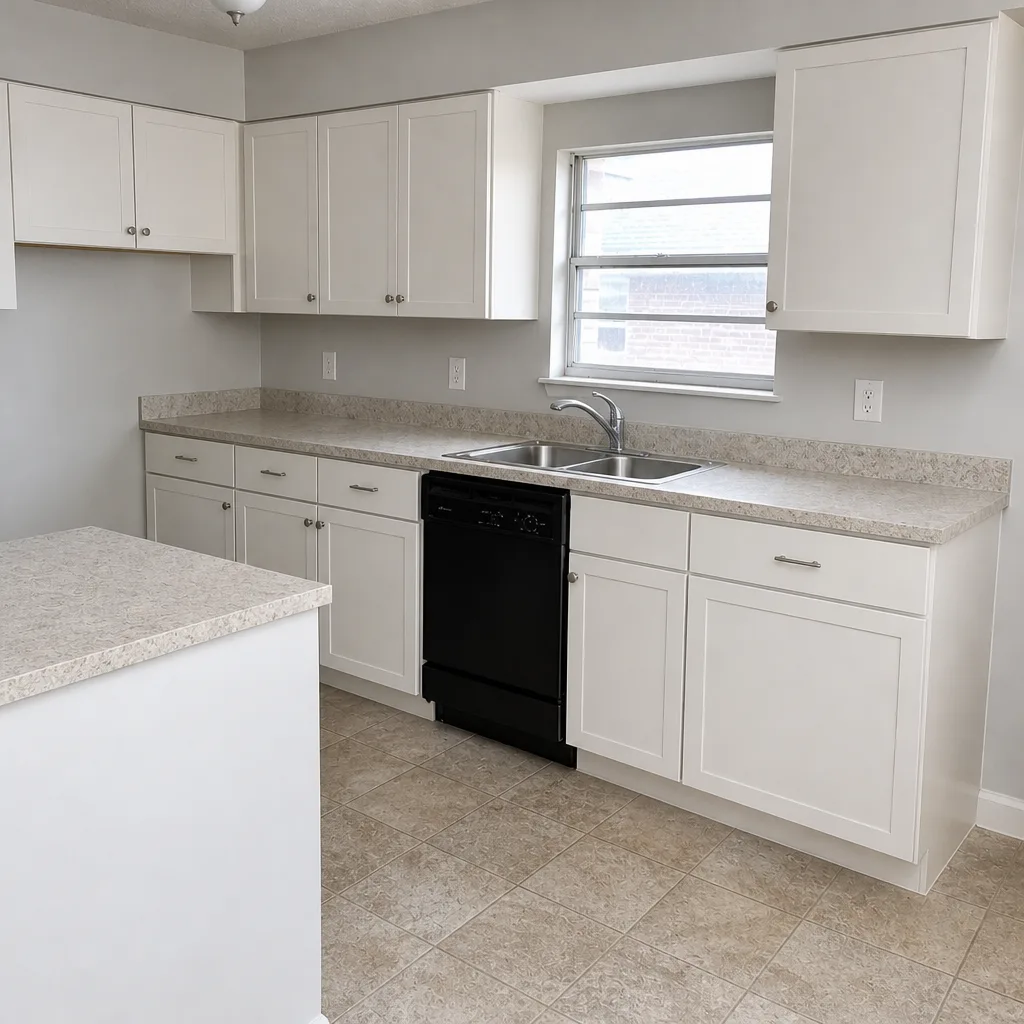
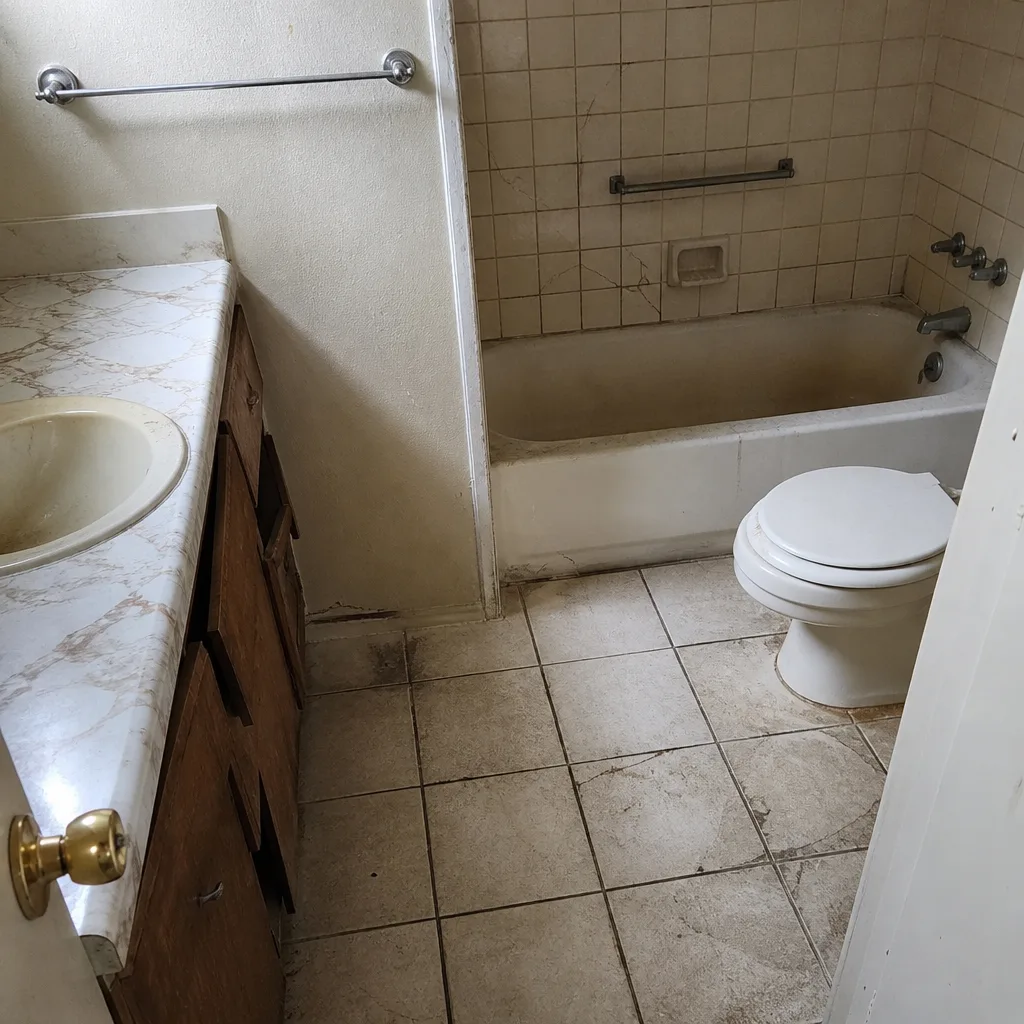
Some of this guide is inspection and scheduling work you can do yourself. The rest is a scope of construction, and that’s the point to call a pro: any burst or frozen pipe, structural cracks in brick or a sticking door that traces to foundation movement, hail damage that needs a roof or siding scope, an exterior soffit or siding run that needs replacement rather than a caulk touch-up, or an HVAC system showing low charge and short cycling at the same time. Those are all situations where the fix has to be done to a written spec, not patched. If your project is interior, our Kitchen Remodeling in McKinney and Bathroom Remodeling in McKinney pages cover how we scope and price that work. Bradford Remodeling Co McKinney offers free estimates in McKinney – call (844) 834-0609.
Frequently Asked Questions
Pre-freeze pipe prep in November and December, done specifically to your home’s pipe exposure profile. In Collin County slab construction, the highest-risk lines are inside exterior wall cavities, in unconditioned attic runs, and at garage wall crossings, not the main supply. Check those specific runs, insulate them, and protect the hose bibs before the first hard freeze.
Hail season in North Texas runs March through June. After a storm, photograph the ground-level damage first, then get a professional roof inspection before you file an insurance claim. Documentation before the call is what gets a full scope approved instead of a partial settlement. Call (844) 834-0609 for a free inspection estimate.
Twice a week with a deep soak through the dry stretch, starting in late June and running through the fall rains. The goal is to keep the clay soil consistently moist so it never fully desiccates and then swells abruptly. Taper off the watering a couple of days before a big fall rain system arrives.
Every 30 days through October and November. McKinney’s fall swing season cycles the system between heating and cooling within the same week, which loads the filter faster than steady summer or winter operation. Check the filter monthly, not quarterly, through the swing season.
Yes, if it goes through a full summer without attention. UV oxidizes and fades the surface, and neglected boards can chalk or cup. Clean and reseal per the manufacturer’s spec each spring, before peak UV, and inspect the substructure and fasteners for movement.
Clay soil under a slab foundation shrinks through a dry McKinney summer and swells again when the fall rains return, and that uneven movement is what cracks brick veneer. If the cracks are stair-step and the doors stick, get a structural assessment rather than patching the brick. Call (844) 834-0609 to schedule a free estimate.
The Bottom Line
McKinney’s climate doesn’t run on the national maintenance calendar. It runs on a long UV-brutal summer, a March – June hail window, a drought that cracks the clay, and a hard freeze in winter. Sequence your work to that calendar: pre-freeze pipe prep in November, hail documentation in spring before you file, caulk and decking before peak UV, deep foundation watering from late June, and a filter and refrigerant review in October. The homeowner who gets the sequence right spends far less on repairs than the one who’s always a season behind. Get a written price before work starts, and hold it to that price.
Bradford Remodeling Co McKinney puts every price and every guarantee in writing before any work begins, and every completed project carries the 365-Day Done Right Promise: if the work fails inside that year, we come back and correct it at no charge. Call (844) 834-0609 to schedule your free estimate.
Written by the team at Bradford Remodeling Co McKinney.
See the difference
 Before
 After
 Before
 After
 Before
 After