
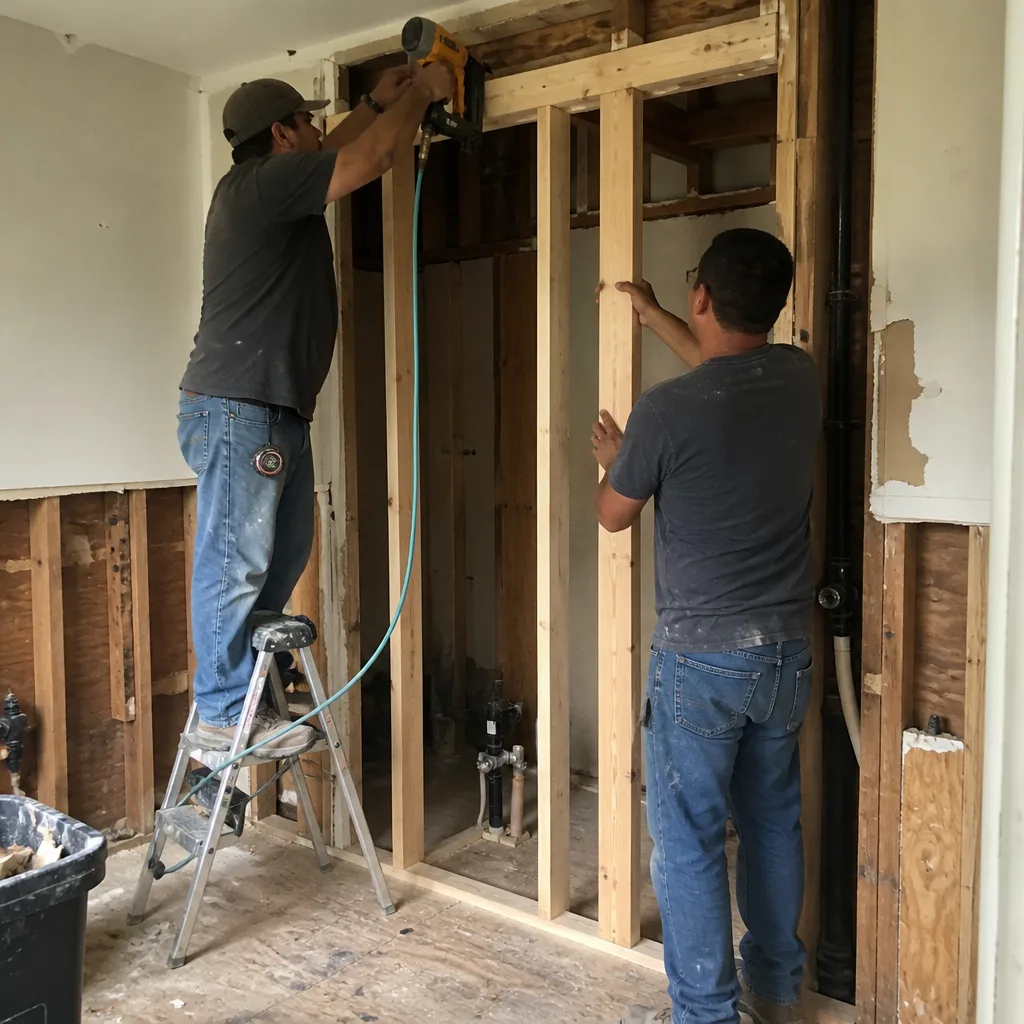
Last updated November 18, 2026







Free written scope consultation - allowances, timeline, and change-order rules on paper before a single trade is scheduled
How to Hire a Construction Contractor in McKinney: A Step-by-Step Guide
Of the three bids you collect for a remodel, the lowest one is almost always missing something – a permit line item, a disposal fee, or a materials allowance that will quietly become a change order three weeks into the job. The question isn’t which bid is cheapest; it’s which contractor will show you exactly what’s in and what’s out before you sign. Most hiring advice stops at “get three bids and check reviews,” which is why so many McKinney homeowners end up comparing documents written to three different scopes and calling it an apples-to-apples decision. This guide walks through a contract-first vetting process: how to verify a Texas contractor’s licensing through the TDLR database, how to force line-item comparisons across bids, what a legal Texas construction contract must include, how to read an insurance certificate, and how to tie payments to verified milestones.
Quick Answer
To hire a construction contractor in McKinney, verify the contractor’s license status through the Texas Department of Licensing and Regulation (TDLR) database, collect at least three bids written to the same line-item scope, confirm the insurance certificate names you as a certificate holder, and sign a written contract that complies with the Texas Residential Construction Liability Act before any work begins. The lowest bid is rarely the cheapest project – it’s usually the one with the most gaps that become change orders.
Styles & brands we work with
- Kitchen remodeling
- Bathroom remodeling
- Home additions & ADU
- Roofing
- Windows & doors
- Driveway & pavers
- Fence
Table of Contents
- How Do You Verify a Contractor’s License in McKinney?
- How Do You Compare Bids Apples-to-Apples?
- What Must a Texas Construction Contract Include?
- What Should You Look for in a Contractor’s Insurance Certificate?
- How Should You Structure a Payment Schedule?
- What McKinney-Specific Issues Affect Contractor Hiring?
- Which Trade Do You Actually Need?
- Common Mistakes to Avoid
How Do You Verify a Contractor’s License in McKinney?
You verify a Texas contractor by searching the TDLR database at tdlr.texas.gov, not by looking for an LLC filing on the Secretary of State’s website. An LLC registration proves a business entity exists in Texas – it says nothing about whether that business is licensed to perform the work you’re hiring for. This is the single biggest misunderstanding we see among McKinney homeowners, and it’s the gap that lets unqualified crews walk onto a residential job.
Texas does not license general contractors statewide, which surprises people. What Texas licenses is specific trades. The license types that matter most for a McKinney remodel:
- Electrical (TECL): The Texas Electrical Contractors License. Residential electrical work in McKinney requires a licensed master or journeyman electrician. The contractor company itself must hold an electrical contractor license.
- Plumbing (RMPL): Residential Master Plumber License. Any plumbing rough-in – moving a sink, adding a bathroom, re-piping – requires a licensed plumber working under a licensed plumbing contractor.
- Mechanical/HVAC (TACL): Air conditioning and refrigeration contractor license. Small HVAC-related projects, like relocating a duct run, fall under this.
- Lead-safe (RRP): Required if the home was built before 1978 and any work disturbs painted surfaces.
Here’s how to check, step by step:
- Go to tdlr.texas.gov and open the License Search tool.
- Enter the contractor’s business name exactly as it appears on the bid.
- Confirm license status shows “Active” and note the expiration date.
- Cross-check the name on the license against the name on the contract – they should match. If the license is held by a sub whose name you’ve never seen, ask how that sub is contracted to the general contractor.
- Save a screenshot of the license record to your project file.
In a full McKinney remodel, the general contractor you hire will bring licensed subs in each of these categories. Ask which licenses each sub holds before work starts. Our technicians have up to 22 years of experience with licensed trade coordination on McKinney projects, and we’ve seen firsthand that the license check is where the weak bids fall out.
How Do You Compare Bids Apples-to-Apples?
You compare bids apples-to-apples by rewriting every proposal onto a single line-item template before you compare prices. Three contractors will each present a bid in their own format – one lumps “kitchen remodel” into a single price, another itemizes, a third is missing the permit line entirely. Until those bids sit on the same document, you’re not comparing prices; you’re comparing formatting.
Here’s the line-item template we recommend. Build it in a spreadsheet and fill in one column per contractor:
- Demolition and disposal: dumpster line, haul-away cost, and whether it includes the cabinets and flooring
- Permit fees: listed as a separate, real number, not “included”
- Rough-in labor: electrical, plumbing, mechanical, itemized by trade
- Materials by brand and SKU: KraftMaid vs. Wellborn cabinets, Cambria vs. Caesarstone counters, Kohler vs. Moen fixtures – named, not “premium brand”
- Materials allowances: the dollar cap and the overage rate
- Installation labor: line-itemed by phase
- Site protection and cleanup: flooring cover, daily sweep, final detail clean
- Contingency: the percentage held back for unknowns
- Change order rate: the hourly or per-item charge for scope changes
Once you have three columns filled in, the picture changes fast. The bid that looked $8,000 cheaper in total often turns out to be missing a $2,400 cabinet allowance, $650 in permits, $900 in disposal, and an unstated change-order rate that will hit during framing. This is the moment to hand the contractor your template back and ask them to re-bid on your form.
Bradford Remodeling writes every project to a line-item scope with a written price before any work starts, and we work with a documented roster of name-brand materials – KraftMaid, Wellborn, Cambria, Silestone, Caesarstone, Kohler, Moen, GAF, James Hardie, Therma-Tru – so the spec is traceable on the page and there’s nothing to guess. Our General Contractor in McKinney team routinely hands homeowners this template before they’ve signed anything.
What Must a Texas Construction Contract Include?
A legal Texas residential construction contract must include the scope of work stated with reasonable specificity, the total contract price, a payment schedule, the start and substantial completion dates, a description of insurance coverage, and the notice-of-claim language required under the Texas Residential Construction Liability Act (RCLA, Texas Property Code Chapter 27). The RCLA governs most disputes between homeowners and contractors on residential work, and specific clauses strengthen your position if a dispute happens.
Ask for these clauses in writing before you sign:
- Written scope of work: every specification, brand, and quantity spelled out. “Kitchen remodel” is not a scope; a line-item with cabinet brand and counter material is.
- Fixed price with a change order procedure: the base price and the exact written process by which any change is priced and approved before it’s executed.
- Substantial completion date and definition: what “substantially complete” means (usually: the home is usable for its intended purpose, with only punch-list items remaining).
- Warranty terms: what’s covered, for how long, and who to call if it fails. Bradford’s projects carry a written 365-Day Done Right Promise – if the work fails inside that window, we come back and correct it at no charge.
- Right to cure / repair-and-offer notice: under the RCLA, the contractor generally has an opportunity to inspect and offer a repair before you can sue. Make sure the contract’s language doesn’t shortcut your rights here or the contractor’s.
- Dispute resolution: mediation is common and preferred. Watch for mandatory binding arbitration clauses – they’re legal in Texas but they can limit your options.
- Lien waiver process: the mechanism by which the contractor certifies that subcontractors and suppliers have been paid, so no mechanic’s lien lands on your title later.
A contract that runs to two pages and says “install kitchen per plan” isn’t a contract – it’s a handshake with a signature line. Any contractor who resists putting the scope in writing is telling you something about how change orders will go.
What Should You Look for in a Contractor’s Insurance Certificate?
You should look for three things on a contractor’s certificate of insurance: general liability coverage limits, workers’ compensation status, and your listing as a certificate holder. A certificate that names you as “additional insured” is better than one that names you as “certificate holder.” The distinction matters more than most homeowners realize.
Here’s what each piece actually covers:
- General liability (GL): covers third-party property damage and bodily injury caused by the contractor’s work. It does not cover the contractor’s own employees who are injured on your property – that’s workers’ comp.
- Workers’ compensation: required in Texas for construction companies with five or more employees. Without it, an injured worker can come after your homeowner’s policy. Ask for the certificate and confirm the carrier and policy dates.
- Additional insured status: means the contractor’s GL policy extends to protect you specifically. Certificate holder status only means you’ll be notified if the policy is cancelled – useful, but it doesn’t give you coverage.
Green flags on the certificate: current effective dates (not expired), a carrier rated A- or better by AM Best, limits appropriate to the project size (a kitchen remodel typically calls for $1M per occurrence / $2M aggregate; a whole-home remodel may call for higher), and a subcontractor default insurance rider if the GC uses multiple subs. Red flags: a policy that expires within the project timeline, a workers’ comp waiver, or a certificate with blurry dates you’re asked to ignore.
Call the insurance carrier directly and confirm the policy is active. A certificate is a snapshot – the carrier’s phone rep is the source of truth. Any established contractor expects the call.
How Should You Structure a Payment Schedule?
You should structure a payment schedule that ties disbursements to verified milestones rather than calendar dates. A schedule that says “$8,000 due June 15 and $8,000 due July 15” tells you nothing about whether the work is done. A schedule that says “$8,000 due when the cabinets are installed and inspected” gives you a lever if the work stalls.
Here’s the payment structure we recommend for McKinney projects:
- Deposit: 10-15% at signing, never more. This covers material ordering and initial scheduling. It is not a loan to the contractor.
- Rough-in milestone: 20-25% when framing, electrical, plumbing, and mechanical rough-in are complete and inspected by the city. Do not pay this before inspection sign-off.
- Drywall and finishes milestone: 20-25% when drywall is complete and finish materials are on site.
- Final installation milestone: 20-25% when cabinets, counters, fixtures, and flooring are installed and the punch list begins.
- Final payment: 10% after punch list is signed off, final inspection is passed, and lien waivers from subs and suppliers are in hand.
The 10% holdback is the most important number here. It’s the reason a contractor comes back to fix the punch list. Once you’ve made the final payment, your leverage is gone – except for the written guarantee, which is why it needs to be in the contract in plain language. If a contractor asks for 50% down at signing, that’s a working-capital conversation disguised as a deposit. Don’t take it.
One more McKinney-specific structuring note: for projects that require a permit from the City of McKinney Building Inspection Division, hold the rough-in installment until the inspection sign-off appears on the city’s permit portal. The inspection record is your proof, not a phone call saying “we passed.”
What McKinney-Specific Issues Affect Contractor Hiring?
McKinney’s mix of new-build subdivisions and mid-century housing stock means contractor vetting depends heavily on the neighborhood. Homes in Stonebridge Ranch and Tucker Hill are often 10-20 years old, which is prime kitchen remodel territory – original cabinets, drywall, and plumbing starting to show age. Homes in the Historic Downtown district near the square add an extra layer: exterior changes may require approval from the Historic Preservation Advisory Board, and window replacements or additions often face stricter review than in a standard subdivision.
The climate piece matters too. McKinney sits in Collin County, north of Dallas, in the black-clay soil band of North Texas. That soil expands and contracts dramatically with the seasonal moisture swings, which stresses slab foundations and eventually causes interior drywall cracking, sticking doors, and tile grout failures. When a contractor bids a whole-home remodel, ask how they’re handling existing foundation movement – a proper bid includes a foundation inspection or an engineer’s letter before the tear-out begins, because remodel scope can change once the foundation is assessed. Bids that skip this step and add it later end up as mid-project change orders.
Permitting runs through the City of McKinney Building Inspection Division. Most kitchen and bathroom remodels require a permit; structural work, electrical panel changes, gas line work, and any addition absolutely do. The permit timeline in McKinney runs four to eight weeks in normal conditions and longer in the spring building season. Ask the contractor what their permit turnaround on similar McKinney projects has actually been – not what they “expect,” what they’ve done. A contractor who can’t tell you the last McKinney permit they pulled doesn’t pull McKinney permits.
Bradford Remodeling is a McKinney contractor, familiar with the city’s permit process and with the specific conditions homeowners in Stonebridge Ranch, Tucker Hill, and the historic district bring to a remodel. Our Kitchen Remodeling in McKinney team bids with the foundation question already built into the scope.
Which Trade Do You Actually Need?
You need a general contractor for anything that involves more than one trade or a permit; you can hire individual trade contractors for single-scope work. Getting this wrong is one of the most common McKinney hiring mistakes – homeowners hire a handyman for work that legally requires a licensed electrician, then discover the problem at inspection time.
- General contractor: kitchens, baths, whole-home remodels, additions, structural changes, and anything with a permit. Responsible for coordinating subs, pulling the permit, and holding the schedule.
- Licensed electrician: any change to wiring, panel, or circuitry, including adding outlets, relocating fixtures, or roughing in new appliances.
- Licensed plumber: any change to water or gas lines, including moving a sink or installing a new fixture.
- Licensed HVAC contractor: duct relocation, new system installs, and any change to the mechanical system.
- Handyman: non-permitted, non-structural small repairs. Do not use for anything requiring a permit.
If your project touches more than one of the licensed categories, you want a general contractor. Bradford Remodeling offers Bathroom Remodeling in McKinney and whole-home work under a single contract, which means the licensed subs come with the general contract – not separately on your plate.
Common Mistakes to Avoid
- Comparing bids without rewriting them to a single template. Three bids in three formats tell you almost nothing. Rewrite each to the line-item template and the real prices appear.
- Confusing an LLC with a license. A Texas Secretary of State LLC registration proves a business exists – not that it’s licensed to do electrical, plumbing, or HVAC work. Check TDLR for the trades.
- Accepting “certificate holder” when you can get “additional insured.” Additional insured status extends the contractor’s general liability policy to protect you specifically; certificate holder status only gets you a cancellation notice.
- Paying more than 15% up front. A 50% deposit is a working capital loan made against a project you haven’t received. Anything over 15% is a legitimate reason to walk.
- Skipping the foundation discussion on a 15+ year-old McKinney home. Black-clay soil movement is a real factor in this part of Collin County, and a bid that doesn’t address it will produce surprise change orders.
- Signing a contract without a written change-order procedure. If the process for pricing scope changes isn’t in the document, “we’ll figure it out” becomes “we’ll bill you whatever we want.”
- Not verifying the permit was actually pulled. In McKinney, confirm the permit is on the city’s portal under the contractor’s business name before work begins. Some contractors will promise you a permit and never file.
See the difference
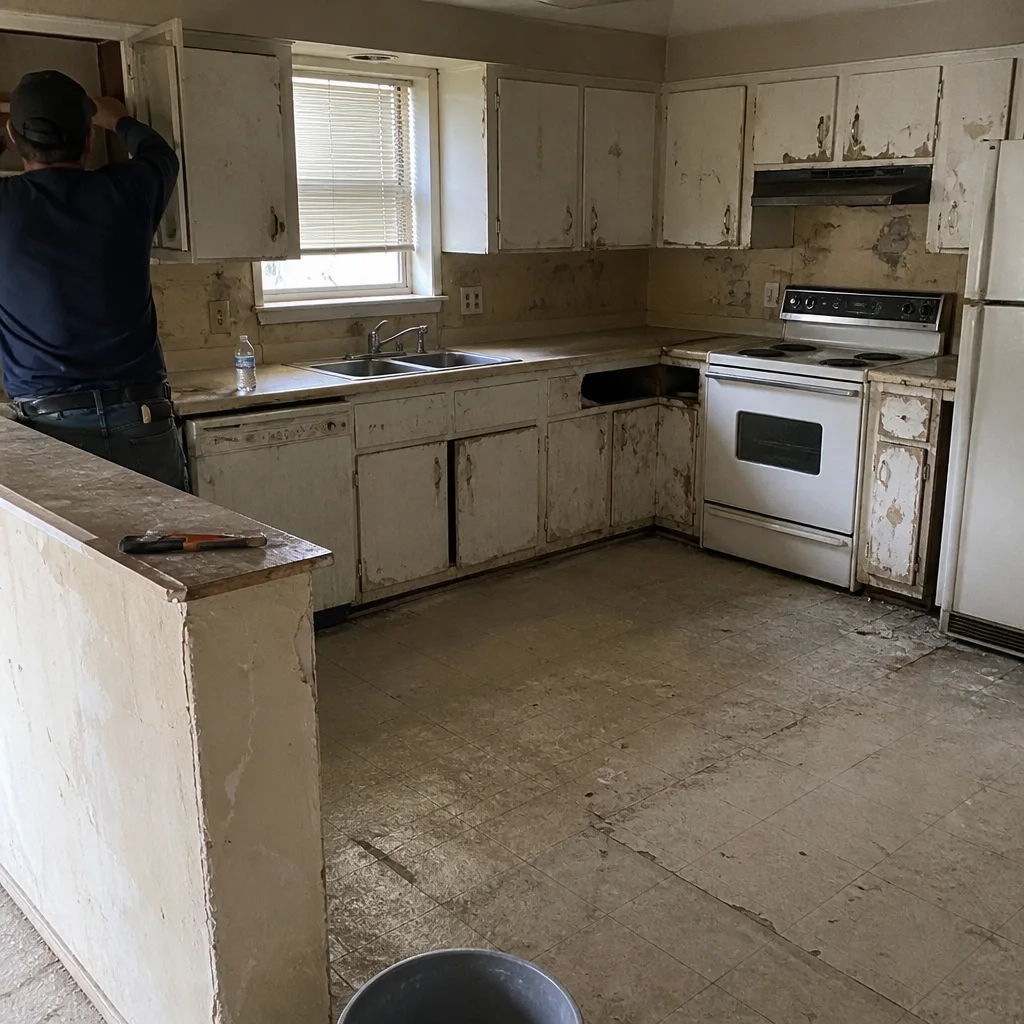 Before
 After
 Before
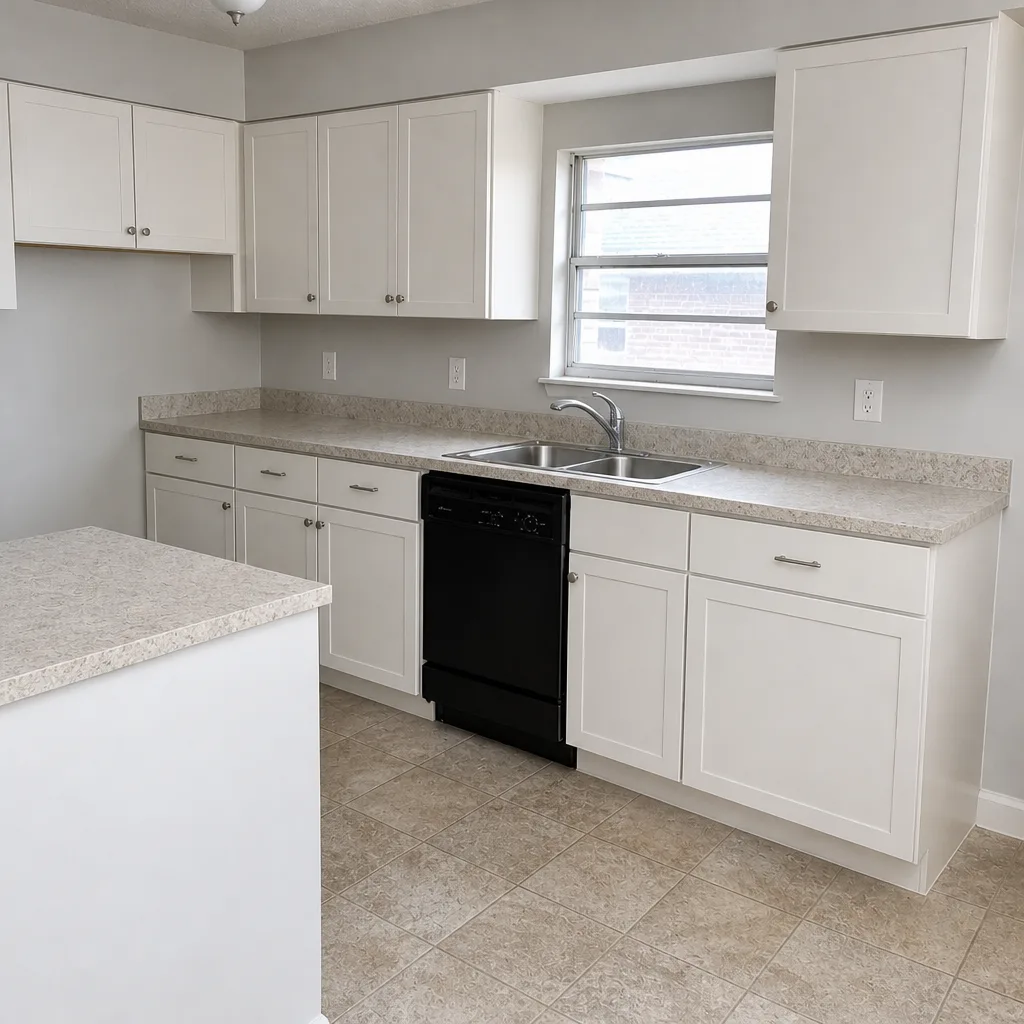 After
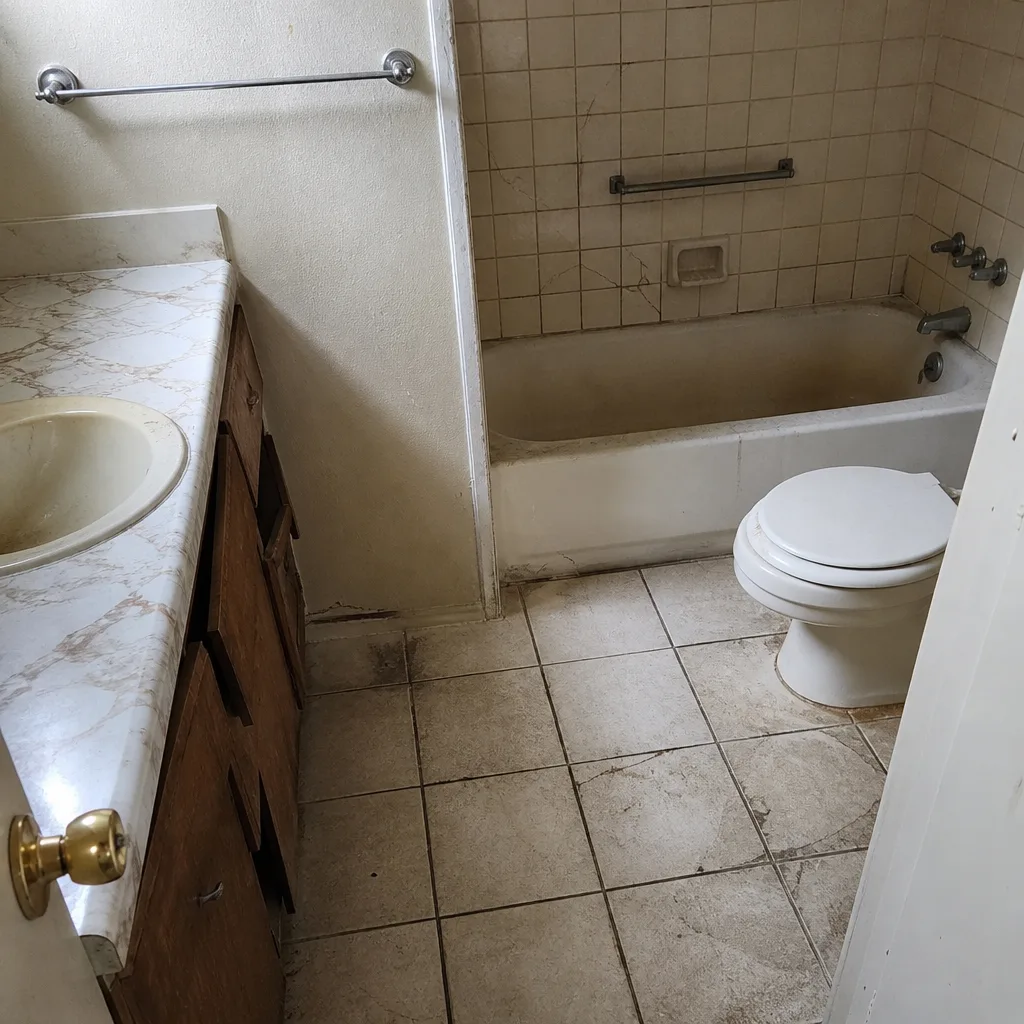 Before
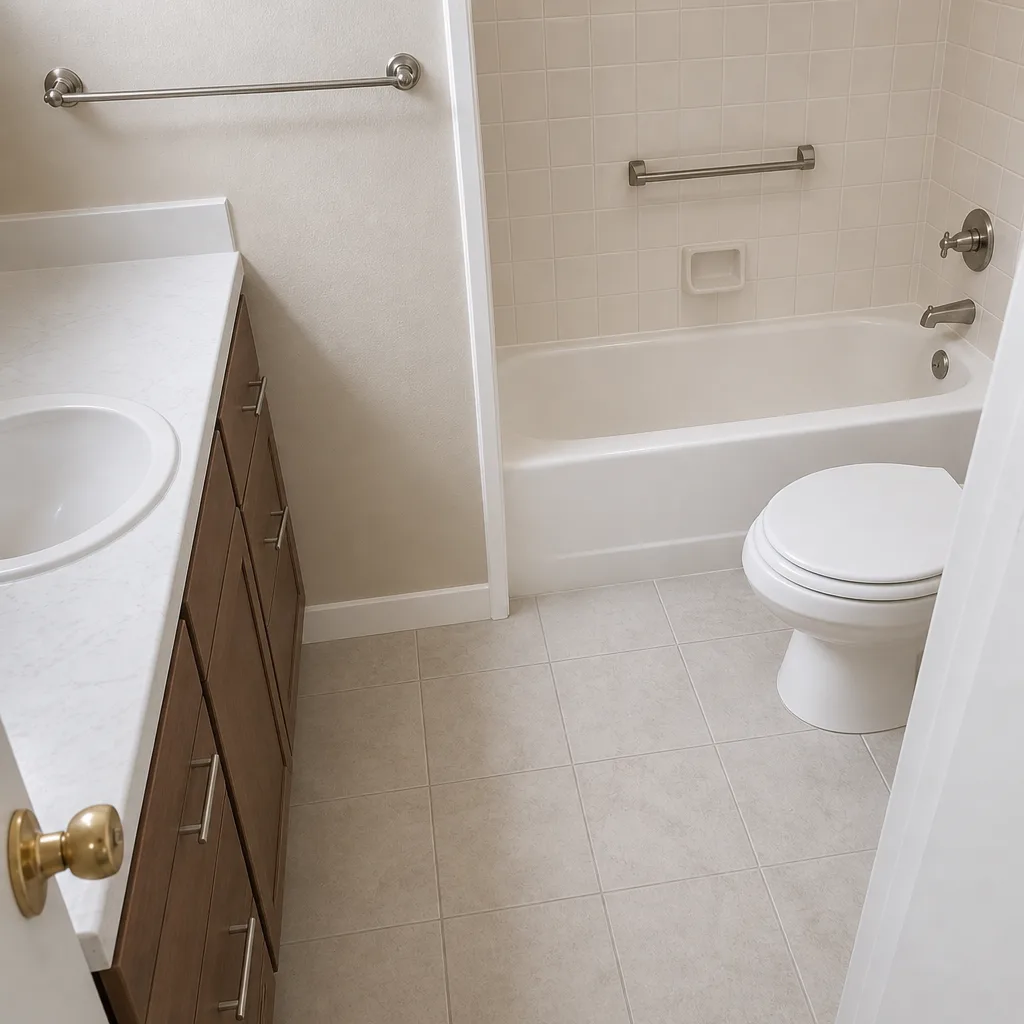 After
When to Call a Professional

Call a professional contractor when the work involves a permit, multiple trades, structural changes, or any licensed electrical, plumbing, or mechanical scope. Specific situations where hiring a pro is the only safe path: removing a wall that may be load-bearing (a structural engineer needs to sign off before demolition), any change to gas piping or electrical panel work (Texas-licensed tradespeople only), any addition or exterior change requiring City of McKinney plan review, and any remodel in a historic-district property. Working on high-tension garage door springs, live electrical panels, gas lines, and roof heights are the categories where a trained professional is the only correct answer – there is no safe DIY version of those tasks.
Bradford Remodeling Co McKinney offers free estimates in McKinney – call (844) 834-0609 to schedule yours. We put every price in writing before work starts, and we answer the phone live, 24/7.
Frequently Asked Questions
General contractor fees in McKinney typically run 15-25% of the total project cost on a full remodel, though some contractors build the fee into the line-item scope instead of quoting it separately. A kitchen remodel in McKinney usually runs $28,000-$85,000 total depending on scope and materials; a whole-home remodel runs $180,000-$450,000+. Every bid should show the general contractor fee as a line item, not fold it into the material pricing invisibly. Call (844) 834-0609 for a written line-item estimate – it’s free.
No – the contractor pulls the permit, not you. In McKinney, the permit should be filed under the contractor’s business name with the City of McKinney Building Inspection Division, and you should be able to verify it on the city’s permit portal before work begins. If a contractor asks you to pull the permit as “homeowner,” that’s a red flag – it puts the liability on your record and usually means the contractor can’t pass inspection or isn’t licensed. Ask to see the permit number before demolition starts. Call (844) 834-0609 to talk through your scope – estimates are free.
A kitchen remodel in McKinney typically takes 8-14 weeks from permit approval to final inspection, with the permit approval itself adding another 4-8 weeks up front. Material lead times – cabinets especially – are the biggest variable; KraftMaid and Wellborn orders can run 6-10 weeks. Add 2-3 weeks if the remodel touches plumbing or electrical relocation. Ask any contractor for their realistic McKinney timeline in writing, not their best-case one. Call (844) 834-0609 for a timeline in your written estimate – free.
The base price should not change – a written price before work begins is the standard, and change orders only occur when you agree to a scope change in writing first. In Texas, change orders must be priced and approved before work proceeds, which is why the change-order procedure belongs in the contract. Any contractor who says “we’ll see how it goes” doesn’t have a pricing process. At Bradford Remodeling, the written price is non-negotiable and change orders are approved in writing before execution. Call (844) 834-0609 to see a sample itemized estimate – it’s free.
Yes – Bradford Remodeling pulls every required permit through the City of McKinney Building Inspection Division under our business name, and we hold the project until the final inspection passes. The permit number and inspection record become part of your project file. Structural, electrical, plumbing, mechanical, and gas lines each require permits in McKinney; we file them all as part of the scope and pass every inspection before we close out the job. Call (844) 834-0609 to review your project’s permit requirements – estimates are free.
You verify the trade licenses, not a general contractor license – Texas licenses electricians, plumbers, and HVAC contractors through TDLR, but not general contractors. So the correct check is: confirm the general contractor’s business registration through the Texas Secretary of State (an active LLC doesn’t prove licensing, just existence), then ask which licensed subs they work with, and confirm each sub’s TDLR license is active by searching their business name on tdlr.texas.gov. Get the sub list in writing as part of the contract. Call (844) 834-0609 to ask how we handle licensing on McKinney projects – estimates are free.
The Bottom Line

The three-bids-and-check-reviews advice fails because it doesn’t force contractors onto a shared template or expose what’s missing from the lowest bid. The contract-first process does: verify trade licenses through TDLR, rewrite every bid to a line-item template, confirm insurance names you as additional insured, sign a contract that includes the RCLA notice language and a written change-order procedure, and tie payments to verified milestones with a 10% holdback. Every step is designed to expose the gaps before money changes hands. Start with a written, itemized price – Bradford Remodeling Co McKinney home – and you’ll know which bid is really the cheapest. When you’re ready to see what a squared-away bid looks like, call (844) 834-0609 for a free estimate. Every project we complete is covered by our 365-Day Done Right Promise, written into the contract before work starts.
Written by the team at Bradford Remodeling Co McKinney.