

Last updated November 18, 2026








Free written scope consultation - allowances, timeline, and change-order rules on paper before a single trade is scheduled
Kitchen Remodeling Warning Signs Every Homeowner Should Know
The contractor who burned you didn’t turn bad halfway through the job. The warning signs were in the quote: no line-item pricing, no permit mention, a start date with no finish date attached. In our experience, the sales conversation is where a bad remodel is decided, long before anybody swings a hammer. That’s why this guide treats the bidding process itself as the inspection. You’ll learn what a lump-sum estimate hides, why a contractor who never mentions permits is already planning to skip them, and how to read a payment schedule before you sign. We’ve spent years watching McKinney kitchens get torn apart and rebuilt, and the honest truth is that most disasters were visible on paper weeks before demo day.
Quick Answer
The reliable warning signs of a bad kitchen remodel are almost always in the paperwork: a lump-sum price with no line items, no mention of permits, a payment schedule that front-loads 50% or more, a start date with no finish date, and a guarantee written in feel-good language instead of enforceable terms. If any of those show up in the first conversation, you’re seeing the job before it starts. A kitchen remodel in McKinney typically runs $28,000 to $85,000 depending on scope and finish level, so the difference between a disciplined bid and a vague one can be tens of thousands of dollars and months of your life.
Styles & brands we work with
- Kitchen remodeling
- Bathroom remodeling
- Home additions & ADU
- Roofing
- Windows & doors
- Driveway & pavers
- Fence
Table of Contents
- Decoding a Lump-Sum Estimate vs. a Line-Item Scope
- Why “We Don’t Pull Permits” Is a Cost You’ll Pay at Resale
- The Disappearing Subcontractor Pattern
- Front-Loaded Payment Schedules: The Cash Warning Sign
- What a Written Guarantee Has to Say to Be Enforceable
- Sales Conversation Red Flags Most Homeowners Miss
- McKinney-Specific Warning Signs
- A Step-by-Step Bidding Checklist
Decoding a Lump-Sum Estimate vs. a Line-Item Scope
A lump-sum estimate is one number on one line. It tells you the total and nothing else. A line-item scope breaks that number into the trades that make it up: demolition and haul-away, framing, rough-in plumbing and electrical, drywall, cabinetry, countertops, tile, paint, finish carpentry, and appliances. When a contractor hands you a lump sum, the gap between the big number and the small amount of detail is where your money goes to hide.
Here’s what a real line-item scope shows, and what a lump sum conceals:
- Cabinetry: the brand, the door style, the box construction. A lump sum says “cabinets” and leaves the brand undefined, which is where KraftMaid and Wellborn specifications get swapped for something nobody can trace.
- Countertops: material, thickness, edge profile, and fabricator. Cambria and Caesarstone are premium surfaces; “quartz” in a lump sum could mean a stock slab at half the cost.
- Substrate and backing: what goes under the tile and behind the drywall. This is the layer most homeowners never see and the layer most likely to be skipped when nobody’s looking.
- Appliances and fixtures: the exact model numbers for the Kohler or Moen fixtures, so nobody substitutes a discontinued line at full price.
- Labor by trade: who’s doing what, and whether it’s a crew or a subcontractor.
When a bid in McKinney comes in $15,000 below the others with a single number attached, the honest explanation is that the scope is smaller than you think. Ask for the line items. If the contractor can’t produce them in writing, that’s your first fact, not your last question.
Why “We Don’t Pull Permits” Is a Cost You’ll Pay at Resale
Permits are the paper trail that proves the work was done to code. In McKinney, kitchen remodels that touch plumbing, electrical, or structural changes require permits and inspections. A contractor who never brings up permits in the first conversation is telling you something: they’re planning to skip them, and you’ll carry the consequence.
Here’s what that consequence looks like at resale. When you list a McKinney home, a buyer’s inspector will look for permits on any work that shows up in the records. Unpermitted electrical work behind the wall, an added circuit that never got inspected, or a relocated gas line with no documentation can flag in a title search or a buyer’s due diligence. Lenders can balk. Buyers can ask for a credit or walk. And the cost to retroactively permit work – opening walls, hiring an engineer if needed, paying twice – lands on the seller, not the contractor who skipped it.
The safety angle matters just as much. Kitchen work runs near gas lines and electrical panels, and both are genuinely dangerous to touch without training. Our approach is plain: the local pro is licensed and insured as the state requires, permits are pulled before the first trade starts, and inspections pass before we ask for a final payment. That’s not a selling point, it’s how the job is supposed to run. If a bid in McKinney doesn’t name the permit step, ask why in writing.
The Disappearing Subcontractor Pattern
Some general contractors win the job in the sales meeting and then staff it with whoever’s available that week. The person who walked you through your kraftmaid cabinets and your Cambria counters is not the person doing the framing. That’s not automatically a problem – good GCs work with regular subs – but the disappearing pattern has a specific tell.
Watch for these signs of the disappearing sub:
- A rotating cast. At any given point, the crew on your job has never met the person who sold it. The only through-line is a phone number that answers inconsistently.
- No named trades in the scope. A written scope that says “plumbing and electrical” without naming who does the work is a scope that changes hands mid-project.
- Gaps between trades. The drywall sits for two weeks because the guy who was supposed to follow isn’t available. Your kitchen becomes somebody else’s filler job.
- No background checks mentioned. A GC who can’t tell you who’s coming through your door, or how they’re vetted, hasn’t decided who that is yet.
In McKinney, we’ve seen kitchens stretch from a six-week scope to five months because the GC was juggling three jobs and a shifting roster of subs. What protects you is a documented scope and a contractor who knows, before the bid, exactly which trade does what and when. That’s the level of discipline a homeowner should be able to feel in the paperwork.
Front-Loaded Payment Schedules: The Cash Warning Sign
A payment schedule that asks for 50% or more upfront is a structural warning sign, not just a rude one. It means the contractor is using your money to buy materials for someone else’s job, or worse, to stay afloat. A healthy remodel funds itself out of the working capital of the contractor, not out of your checking account before the cabinets even arrive.
A payment schedule a homeowner can trust looks roughly like this:
- Deposit: enough to order materials and lock the schedule – typically 10% to 20% of the contract.
- Rough-in payment: after framing, plumbing, and electrical are inspected and passed.
- Progress payments: tied to specific milestones – cabinets set, counters installed, tile finished – not to a calendar date.
- Final payment: after the punch list is signed off and the written guarantee is in your hand.
If the schedule pays the contractor past 60% before the cabinets are on site, ask why. Any smooth operator will have a reason. A disciplined one will have it in writing, tied to a real milestone, and it won’t move at the door.
What a Written Guarantee Has to Say to Be Enforceable
“We stand behind our work” is not a guarantee. It’s a sentence that feels good and covers nothing. A written guarantee has to state what’s covered, for how long, under what conditions, and who pays when it fails. Anything less is marketing copy dressed up as a promise.
Here’s the test we’d apply to any guarantee a McKinney homeowner is handed:
- Scope: does it cover labor and materials both, or just one? A labor-only guarantee leaves you paying for the parts.
- Term: what’s the exact window? “One year” is a term. “For as long as you own the home” needs a definition of ownership.
- Conditions: what voids it? Skipped inspections, homeowner changes, or acts of nature are common carve-outs – those are fair, as long as they’re stated plainly.
- Remedy: does it promise return and correction, or just a refund? A refund leaves you looking for another contractor.
- Whose name is on it: the company, in writing, on a document you keep.
Our version is the 365-Day Done Right Promise: a written guarantee on every completed project. If the work fails inside the year, we return and correct it at no charge. That’s a company promise, made in writing, and handed to the homeowner at the close of the job along with a clean site and a documented scope. If a bid you’re holding can’t show you the guarantee text before you sign, ask for it. The honest contractor will have it ready.
Sales Conversation Red Flags Most Homeowners Miss
The warning signs that predict a bad kitchen remodel show up in the sales conversation, and they’re easy to miss because the person across the table is likable. Watch for the pattern, not the personality.
- The price that moves at the door. A written price before any work starts is the baseline. A price that “we can probably knock down” if you sign tonight is the opposite of a number you can plan around.
- No finish date. A start date with no finish date is a schedule without an end. Ask for both, in writing, and expect the finish date to be contingent on inspections and material lead times.
- Voicemail-only contact. If the only way to reach the company is a message that goes unanswered, you’ve just tested their responsiveness. A live person answering the phone 24/7 is the standard, not a luxury.
- No brand documentation. A premium spec sheet lives and dies by traceable brands. If a contractor can’t tell you the make of the cabinets, the counters, and the fixtures in writing, the materials are a guess.
- Pressure to sign. Scarcity language – “only two slots left” – is the opposite of a disciplined sales conversation. If the offer needs a countdown to make sense, it’s a bad offer.
- No crew information. Background-checked, uniformed technicians on every job means you know who is walking through your door before they arrive. A contractor who can’t answer that question hasn’t decided who’s coming.
The pattern behind all of these is the same: the contractor is trying to sell you a feeling instead of a scope. A disciplined one sells the scope and lets the feeling follow.
McKinney-Specific Warning Signs
Some warning signs are specific to the local market. In McKinney, the housing stock ranges from 1990s builds in Stonebridge Ranch to newer construction on the west side and older homes near downtown. A bid that ignores the age and construction of your home is a bid built for a different house.
What we watch for in McKinney kitchens:
- No mention of cabinet substrate. Older McKinney homes often have drywall-and-furring behind the cabinets, which means re-hanging new cabinetry requires addressing the substrate, not just the doors. A bid that skips this line is a bid that reprices at the door.
- No mention of venting or soffit. Kitchens near downtown McKinney have mature roofs and venting that often needs to be reworked when a range hood goes in. If the soffit and venting aren’t in the scope, they’ll show up as an add-on.
- No mention of the plumbing rough-in. Moving a sink or a dishwasher from one wall to another means reworking the rough-in, and the cost of that is not a number you want to discover after demo.
- No local permit language. McKinney permits go through the city’s building department, and a contractor who hasn’t named that step hasn’t planned for it.
- No sense of the local schedule. Material lead times for premium cabinetry run weeks, not days. A contractor in McKinney promising a six-week kitchen without a cabinet delivery date is promising something they haven’t checked.
Homeowners in McKinney and the surrounding neighborhoods of Stonebridge Ranch, Adriatica, Tucker Hill, and the historic district are often weighing a full remodel against a lighter refresh. For that comparison, the general contractor scope and the kitchen remodeling work in McKinney both have to be spelled out line by line before any number is meaningful.
A Step-by-Step Bidding Checklist
Reading the bid is the inspection. Run every estimate you receive through this checklist before you compare any numbers.
- Confirm the scope is line-item, not lump-sum. If you can’t see the cabinetry, counters, tile, plumbing, and electrical as separate lines, ask for the breakdown in writing.
- Check for the permit step. Ask, in writing, whether permits will be pulled and inspections passed. A contractor who dodges the question is telling you the answer.
- Read the payment schedule. Confirm no more than 20% is due at signing and that subsequent payments are tied to milestones, not calendar dates.
- Ask who’s on the crew. Request the names of the trades doing the plumbing, electrical, and finish work, and confirm background-checked, uniformed technicians are on the job.
- Get both dates. A start date and a finish date, in writing, with the finish date contingent on material delivery and inspection timing.
- Read the guarantee. Confirm what’s covered, for how long, and who returns to fix it. If it isn’t in writing before you sign, it doesn’t exist.
- Ask for the brand list. KraftMaid, Wellborn, Cambria, Caesarstone, Kohler, and Moen are traceable. “High-end cabinets” is not.
- Call the phone number on a Sunday. A live person answering is a real signal about how the job will run.
If you want a reference point, a general contractor in McKinney should be able to walk you through this checklist without hesitation. If they can’t, you’ve already found your answer.
Common Mistakes to Avoid
- Comparing totals instead of scopes. A $60,000 bid and a $45,000 bid can be the same job if the line items are the same. Usually they aren’t. Read the scope before the price.
- Paying a 50% deposit “to lock the schedule.” The schedule is locked by a written contract, not by cash. A front-loaded deposit is a structural warning sign, not a courtesy.
- Skipping the permit conversation because “it’s a small job.” In McKinney, even a smaller kitchen update can trigger permit requirements if the work touches plumbing or electrical. Skipping the conversation doesn’t skip the inspection.
- Accepting a verbal guarantee. “We’ll take care of you” is not enforceable. A written guarantee states term, scope, remedy, and conditions.
- Not asking who’s on the crew. Background-checked, uniformed technicians on every job means you know who’s in your home. A contractor who can’t answer that question is a risk you don’t need to take.
- Ignoring the timing of material deliveries. Premium cabinetry and quartz counters have real lead times. A finish date with no delivery dates behind it is a wish, not a schedule.
- Treating a low bid as a negotiation starting point. The honest response to a low bid is a scope request. The dishonest one is “we can match.”
See the difference
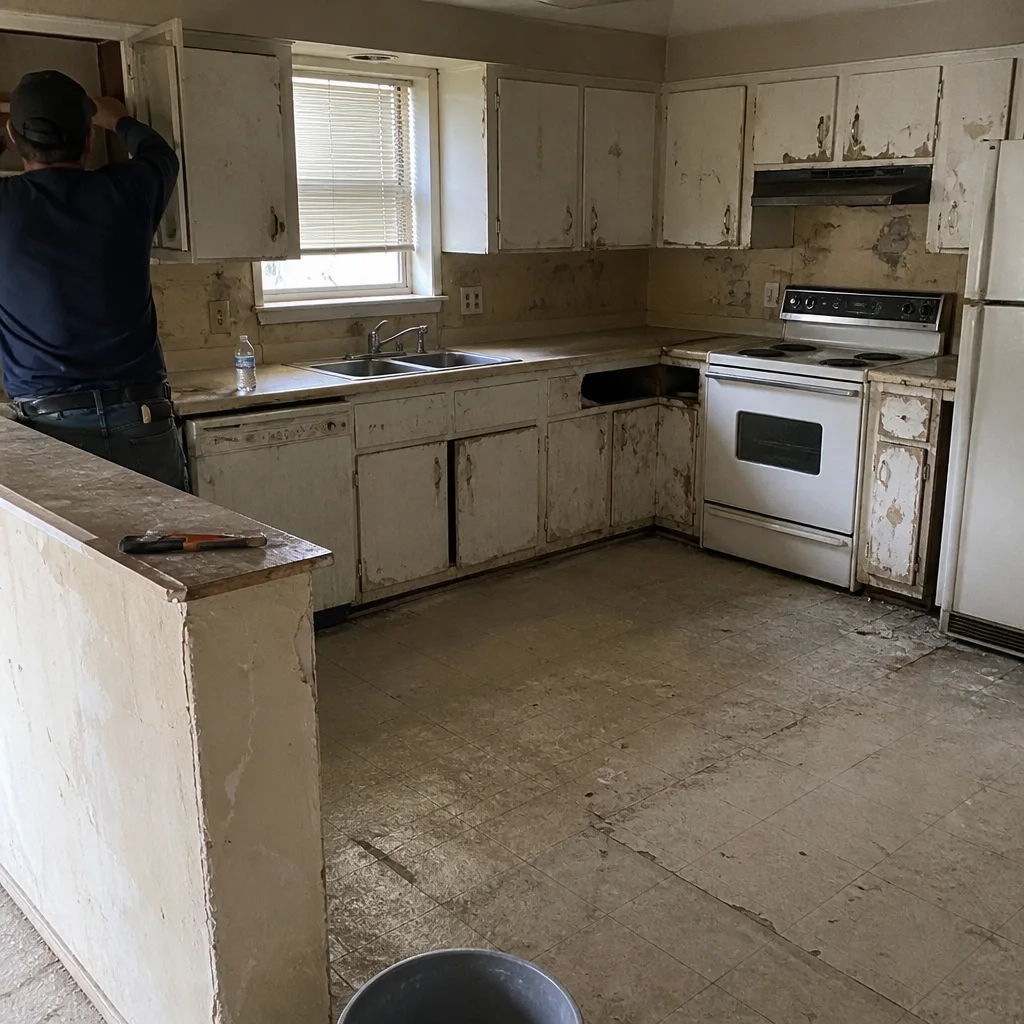 Before
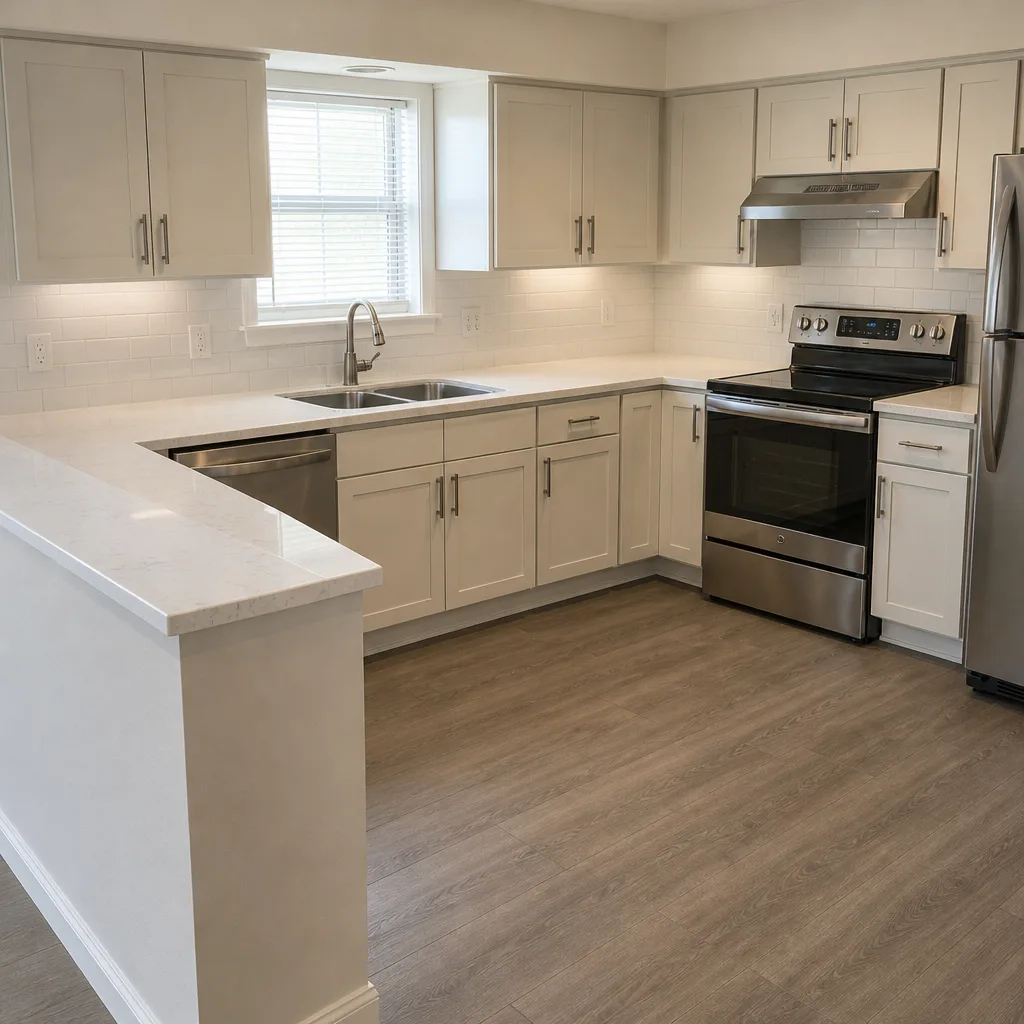 After
 Before
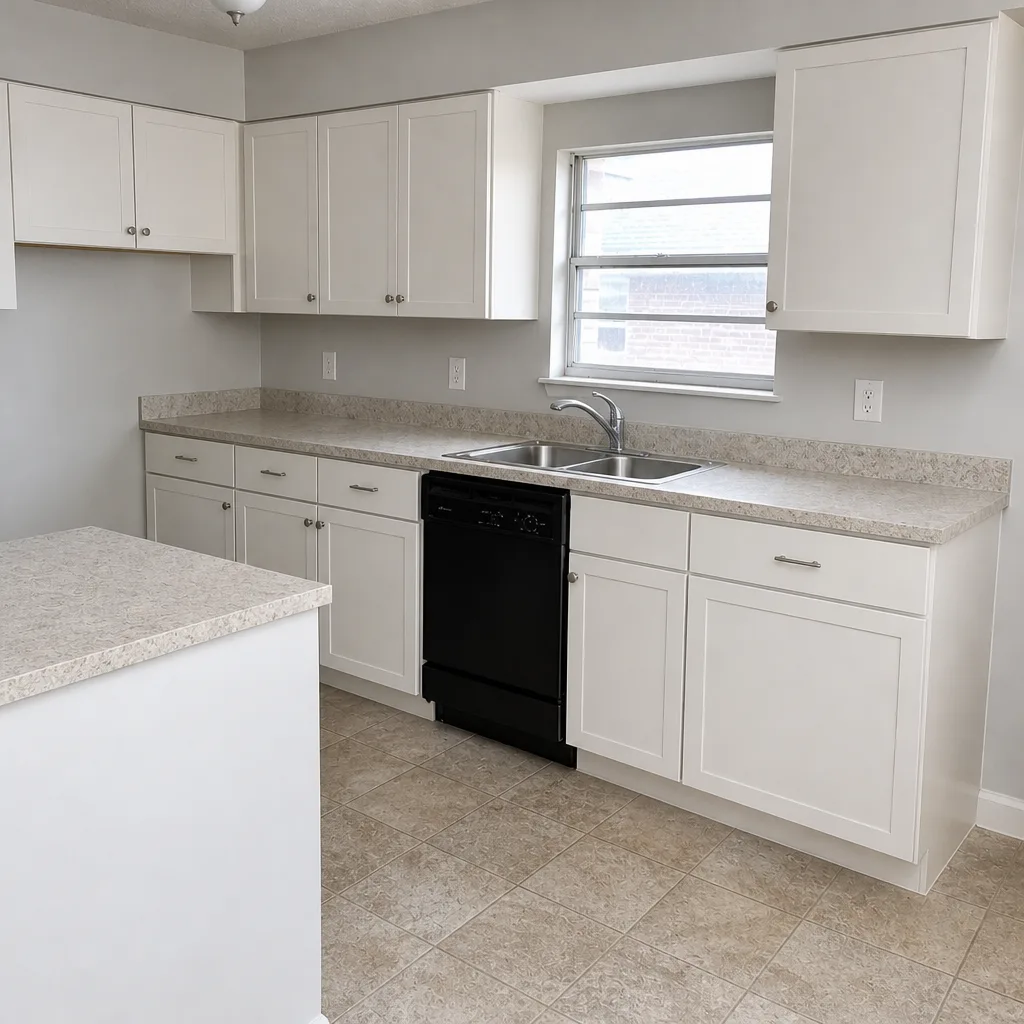 After
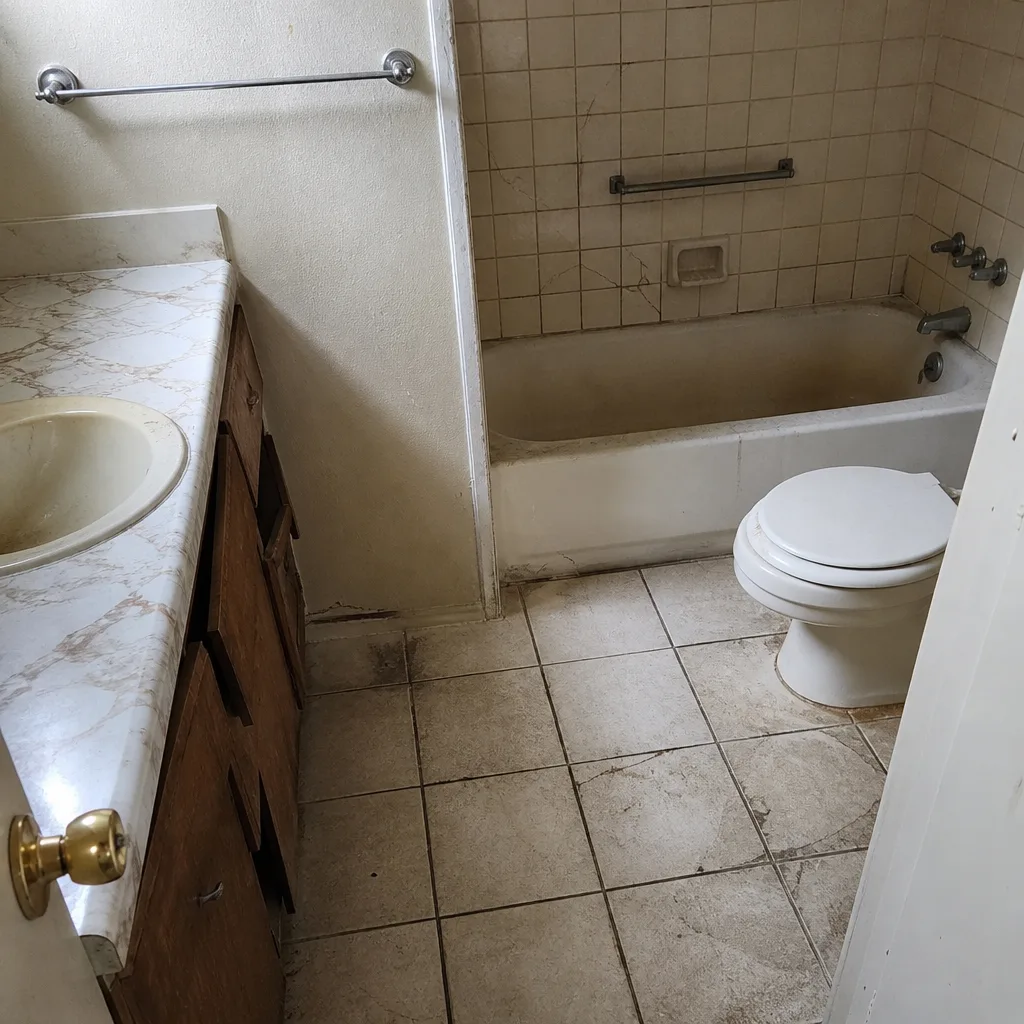 Before
 After
When to Call a Professional
If your bid has a lump-sum price, no permit mention, a start date without a finish date, or a deposit over 20%, call before you sign. Those are the signals that a remodel is going to reprice at the door or stretch against a schedule nobody’s tracking. If you’re mid-project and the crew has changed hands twice without explanation, or the punch list has been open for a month, call before the next draw. Neither is a moment to wait and see. Bradford Remodeling Co McKinney offers free estimates in McKinney – call (844) 834-0609 to schedule one, and bring your current bid to the conversation. We’ll read it with you line by line. Our technicians have up to 22 years of experience, and every project carries a written price before work starts and a 365-Day Done Right Promise behind it.
For homeowners weighing a full-home scope, the Bradford Remodeling Co McKinney home page outlines how the Garrison Standard and the Garrison Code apply to every project. If your project includes the primary bath, the bathroom remodeling in McKinney scope follows the same discipline.
Frequently Asked Questions

Kitchen remodels in McKinney typically run $28,000 to $85,000, with the range driven by cabinetry brand, countertop material, and how much plumbing or electrical has to be reworked. A cosmetic refresh with stock cabinets and standard counters sits at the low end; a full rebuild with KraftMaid or Wellborn cabinetry and Cambria surfaces sits at the upper end. Call (844) 834-0609 for an exact quote – estimates are free.
Not always, but it’s always a signal to ask for line items. A lump-sum bid from a contractor you trust isn’t a scam, but it does leave the scope undefined, which is where substitutions and repricing happen. A written line-item scope protects you regardless of who’s holding the pen.
Because permits cost money, time, and inspections, and a contractor who skips them keeps the difference. The cost lands on you at resale, when a buyer’s due diligence surfaces unpermitted work. In McKinney, permits go through the city’s building department and a licensed pro pulls them before the first trade starts.
A real written guarantee states the term, the scope (labor and materials), the remedy (return and correction, not just a refund), the conditions that void it, and the company name. Ours is the 365-Day Done Right Promise: a written year-long guarantee on every completed project. If the work fails inside the window, we return and correct it at no charge.
Ten to twenty percent is a healthy deposit, tied to a written contract and a material order date. Anything above 30% is a warning sign; 50% or more is a structural problem. If the schedule requires that much cash upfront, the contractor is funding someone else’s job with your money. Call (844) 834-0609 and we’ll help you read the schedule.
A full kitchen remodel in McKinney typically runs 6 to 12 weeks from demo to punch list, with cabinetry and countertop lead times driving the longer end. If a bid promises a shorter window with no delivery dates behind it, the finish date is a wish. Ask for a written schedule tied to material deliveries and inspection timing.
The Bottom Line
The warning signs of a bad kitchen remodel show up in the sales conversation, not during the work. A lump-sum bid with no line items, no permit mention, a front-loaded payment schedule, and a guarantee in feel-good language are four facts you can check before you sign. In McKinney, the difference between a disciplined scope and a vague one is often $15,000 or more, plus months of your life. Read the bid like it’s the inspection, ask for the line items, and if the answers don’t hold, walk. The best remodel you’ll ever do is the one you didn’t talk yourself into.
Written by the team at Bradford Remodeling Co McKinney.