Last updated November 18, 2026








Free written scope consultation - allowances, timeline, and change-order rules on paper before a single trade is scheduled
The Complete Guide to Construction in McKinney
McKinney issued more single-family building permits than any other Texas city its size in 2023. That number sounds like good news, and in many ways it is. It also means every trade in Collin County, from framing crews to electricians to flatwork subs, is backlogged, and the contractor who quotes you a six-week start date may be quoting from wishful thinking rather than a real schedule. McKinney has grown from roughly 54,000 residents to more than 200,000 in two decades, and the construction market has grown faster than the infrastructure meant to review it. This guide maps what that actually means for your project: permit timelines you can plan around, how Stonebridge Ranch and Craig Ranch deed restrictions layer on top of city code, where subcontractor scarcity bites hardest, and how to verify your contractor pulled the right permit before demo day.
Quick Answer
Construction in McKinney runs through two approval systems at once: the City of McKinney’s Development Services department for permits and inspections, and your subdivision’s HOA or deed restrictions for design and material rules. Both apply, and the stricter one usually wins. Plan for permit review to take longer than the national average because of local review volume, expect trade subcontractors to be booked weeks out, and verify every permit yourself through the city’s online records before work begins.
Styles & brands we work with
- Kitchen remodeling
- Bathroom remodeling
- Home additions & ADU
- Roofing
- Windows & doors
- Driveway & pavers
- Fence
Table of Contents
- Why McKinney’s Growth Changed the Construction Market
- HOA Deed Restrictions vs. City Code: Which One Controls
- How the Development Services Backlog Affects Your Timeline
- Where Subcontractor Scarcity Hurts Bid Accuracy Most
- How to Read a McKinney Building Permit Record
- Plan Review vs. Over-the-Counter Permits
- How North Texas Climate Shapes Construction Choices
- How to Choose a Contractor in McKinney
Why McKinney’s Growth Changed the Construction Market
When a city adds roughly 150,000 residents in twenty years, three things happen at once. Builders need more houses, the city needs more staff to review and inspect them, and every trade needs more hands. McKinney got the first two, but the third has lagged. Plumbers, electricians, and HVAC technicians are licensed trades, and the pipeline that trains and licenses them moves slower than a subdivision plat. That gap is what homeowners feel as six-week start dates that slip to ten and bids that shift by thousands between the estimate and the invoice.
The geography matters too. McKinney sits at the northern edge of the Dallas-Fort Worth metroplex, which means crews can and do work across a wide radius. A framing crew that lives in Sherman or works jobs in Frisco has options, and they take the jobs that keep them busy year-round. Homeowners who treat scheduling as a real line item, not an afterthought, get better outcomes. If you’re planning a project and want to understand how a full-service remodel fits that scheduling reality, our overview of Bradford Remodeling Co McKinney home explains where we start.
HOA Deed Restrictions vs. City Code: Which One Controls
In McKinney, you answer to two authorities, and they don’t always agree. City code sets the legal minimum: setbacks, structural requirements, permit thresholds, inspection standards. Your subdivision’s deed restrictions, enforced through an HOA or architectural review committee, can be stricter. When they conflict, you must satisfy both, which in practice means the stricter rule wins. A fence the city permits at six feet might be capped at five in Stonebridge Ranch. A shed the city allows without a permit might still require HOA architectural approval.
This is where national remodeling advice fails McKinney homeowners. A generic guide tells you to pull a permit and call it done. It doesn’t tell you that your Craig Ranch architectural committee may want material samples and a color submission before you touch the exterior, or that approval timelines run separately from the city’s. Our experience on General Contractor in McKinney projects is that deed restriction review should be step one, not an afterthought once the drawings are finished.
What to check before design begins:
- Your subdivision’s recorded deed restrictions, not just the HOA handbook summary.
- Whether your community has a separate architectural review committee with its own submission form.
- Material and color requirements for roofs, fencing, and exterior cladding.
- Any restriction on outbuildings, pools, or additions that goes beyond city code.
- Whether your HOA requires a copy of the approved city permit before work can start.
How the Development Services Backlog Affects Your Timeline
The City of McKinney’s Development Services department reviews permits, and its workload tracks the building boom. When hundreds of permits land in a queue at once, review that might take days in a slower market can stretch to weeks. This isn’t a complaint about the city; it’s a scheduling fact you build into your project plan. The homeowner who expects a permit in a week and starts ordering cabinets gets burned. The homeowner who budgets review time and sequences the job accordingly stays on schedule.
Here’s a realistic sequence for a McKinney remodel that touches structure or systems:
- Confirm deed restriction and HOA requirements and get design approval where required.
- Finalize drawings and specifications so the permit application is complete the first time.
- Submit the permit application and ask for the expected review timeline in writing.
- Respond to reviewer comments promptly; incomplete responses restart the clock.
- Receive the permit and post it on site before demo begins.
- Schedule inspections at each phase; don’t cover work before it’s inspected.
- Receive final inspection and close the permit before the last payment.
Budget review time generously. A complete application reviewed once beats an incomplete one bounced back twice.
Where Subcontractor Scarcity Hurts Bid Accuracy Most
Not every trade is equally hard to book. In our experience across Collin County, three categories are chronically tight and most likely to throw off a bid:
- HVAC. Mechanical work requires licensed technicians, and demand from new construction and replacements keeps them booked. A bid that assumes a mechanical sub can start next week is guessing.
- Electrical. Licensed electricians are the bottleneck on any job that adds circuits, a panel, or new service. Panel work in older McKinney homes adds complexity that a quick quote often misses.
- Flatwork. Concrete crews pour driveways, patios, and slabs, and they’re pulled toward large new-build contracts. Small residential pours can wait in line or get priced high to fit a gap.
What this means for your bid: a quote that names a firm start date without confirming the subs are actually available is optimistic at best. Ask your contractor how they’re holding their trade partners to the schedule. Materials matter too. A documented material roster, whether it’s GAF roofing or James Hardie siding or a Sakrete-based flatwork mix, lets you trace specifications and know exactly what you’re paying for. Vague “builder-grade” language is where surprise costs hide.
How to Read a McKinney Building Permit Record
You can verify a permit yourself, and you should. The City of McKinney publishes permit records through its online portal. Reading one takes five minutes and tells you whether the work on your house is legal and inspected.
Here’s how to read a permit record in order:
- Search by your property address, not just the contractor’s name, so you see every permit pulled at that address.
- Check the permit type. A remodel permit is not a new-construction permit; a mechanical permit doesn’t cover electrical work.
- Confirm the scope matches the actual job. A permit for a “kitchen remodel” that lists no electrical or plumbing is a red flag on a gut renovation.
- Look at the status. “Issued” means work is authorized; “final” or “closed” means it passed its last inspection. “Expired” means the work was never properly closed out.
- Check the inspection history. Every required inspection should show as passed, not pending or failed.
- Match the contractor named on the permit to the one actually doing the work.
If a contractor tells you permits aren’t needed for structural, electrical, or plumbing work, verify that against the city’s requirements before you believe it. A homeowner who inherits an unpermitted addition discovers the problem at resale, when the buyer’s inspector finds it.
Plan Review vs. Over-the-Counter Permits
McKinney issues some permits over the counter and sends others through full plan review, and misclassifying your job is one of the most expensive scheduling mistakes a homeowner can make. Over-the-counter permits cover straightforward, limited-scope work: a like-for-like water heater replacement, a simple re-roof, minor repairs where the scope is clear and no design judgment is involved. Full plan review applies when the work changes structure, layout, systems, or occupancy, or when drawings must be reviewed by multiple departments.
A kitchen remodel that moves a wall or relocates plumbing is plan review. A bathroom that adds a fixture and reroutes a drain line is plan review. A cosmetic cabinet swap with no system changes may not need a permit at all. When a contractor submits a plan-review job as a simple counter permit, the reviewer rejects it, the application gets reclassified, and the homeowner loses weeks in a queue they thought they’d already cleared. Every Kitchen Remodeling in McKinney and Bathroom Remodeling in McKinney project we’ve worked starts by classifying the job correctly, because the classification drives the entire schedule.
How North Texas Climate Shapes Construction Choices
McKinney sits in a climate that stresses buildings in specific, predictable ways. Summers bring weeks of triple-digit heat and sun that breaks down exterior materials fast. The region swings between wet springs and dry, hot summers, which means expansive clay soils that move with moisture and repeatedly load foundations, driveways, and patios. Hail is a standing risk, which is why roof material selection matters more here than in a mild climate. Freezes, like the deep one in 2021, expose any plumbing run that wasn’t insulated or protected.
Those factors should show up in the materials and methods on your project:
- Roofing systems rated for impact resistance, specified rather than left to chance.
- Grading and drainage designed so water moves away from the slab, not toward it.
- Exterior materials that hold up to UV and heat cycling, not just look good the first year.
- Plumbing runs insulated and located where a freeze can’t burst them.
- Concrete flatwork that accounts for soil movement, with proper prep and reinforcement.
This is where a documented material list earns its keep. Manufacturers publish specs and warranties precisely so you can verify that what’s going into your house can survive the climate it’s going into. Our General Contractor in McKinney page walks through how we specify materials to the local conditions rather than defaulting to whatever’s cheapest.
How to Choose a Contractor in McKinney
The contractor you hire matters more than the bid you accept. A disciplined crew with an honest schedule and a written price beats a lower quote from someone who’ll reprice at the door. Here’s what to demand before signing:
- A written, line-item price before any work starts. Not a range, not “call for a quote.” Real dollars against real scope.
- A schedule that names the subs and their confirmed availability. A start date without a confirmed crew behind it is a guess.
- Permit responsibility in writing. Who pulls the permit, who handles inspections, and who closes it out.
- A written workmanship guarantee. Ours is the 365-Day Done Right Promise: every completed project carries a full-year written guarantee, and if the work fails inside that window, we come back and correct it at no charge.
- Identification standards. You should know who’s entering your home. Our technicians are background-checked and uniformed, with identity and conduct standards set at the Garrison Partners level, not left to individual job sites.
- A reachable line. A live person answers our phone 24/7, not a voicemail and not a callback queue.
We operate under The Garrison Standard, and those commitments aren’t optional. The written price is non-negotiable, the guarantee is real, and the close-out is squared away: clean site, documented scope, signed written guarantee in your hand. That’s the standard we hold ourselves to on every McKinney job.
Common Mistakes to Avoid
- Skipping the deed restriction check. Pulling a city permit before your HOA’s architectural committee has signed off can leave you reworking approved plans in Stonebridge Ranch or Craig Ranch after the fact.
- Assuming permits aren’t needed. Structural changes, electrical, plumbing, and HVAC work all have permit triggers. A contractor who waves off permits on a plumbing reroute is creating a problem you’ll inherit.
- Treating a start date as a promise. In a market where trades are booked weeks out, an unconfirmed start date is wishful thinking. Ask which subs are locked in.
- Accepting a bid with undefined materials. “Builder-grade” hides the difference between a real cabinet line and a substitute. Insist on named products and specs.
- Forgetting the inspection sequence. Covering work before it’s inspected voids the approval and can mean redoing finished finish work. Walk the inspection schedule before demo.
- Misclassifying your project. A plan-review job submitted as a counter permit loses weeks when the city reclassifies it. Get the classification right up front.
- Choosing on price alone. The cheapest bid is often the one with a schedule that fails and a scope that grows. Price against a written scope, not against a number.
See the difference
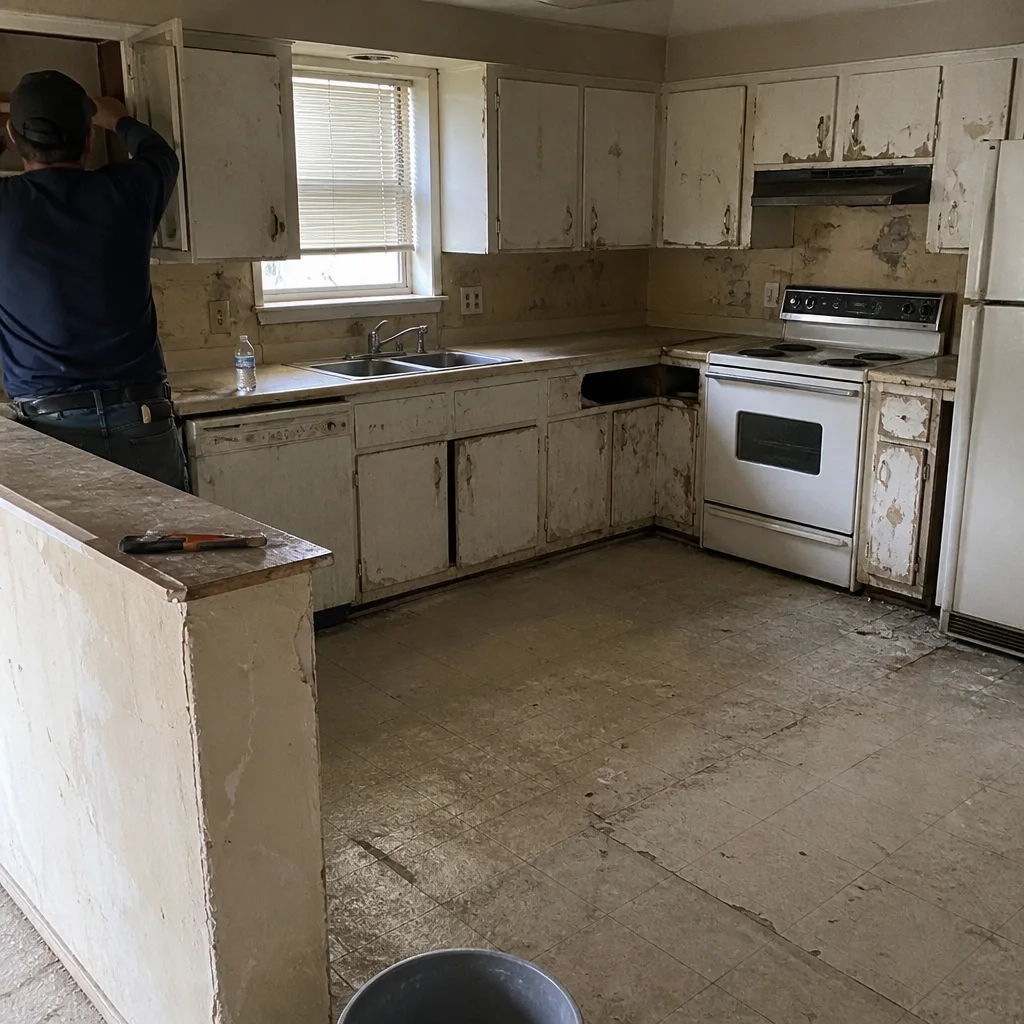 Before
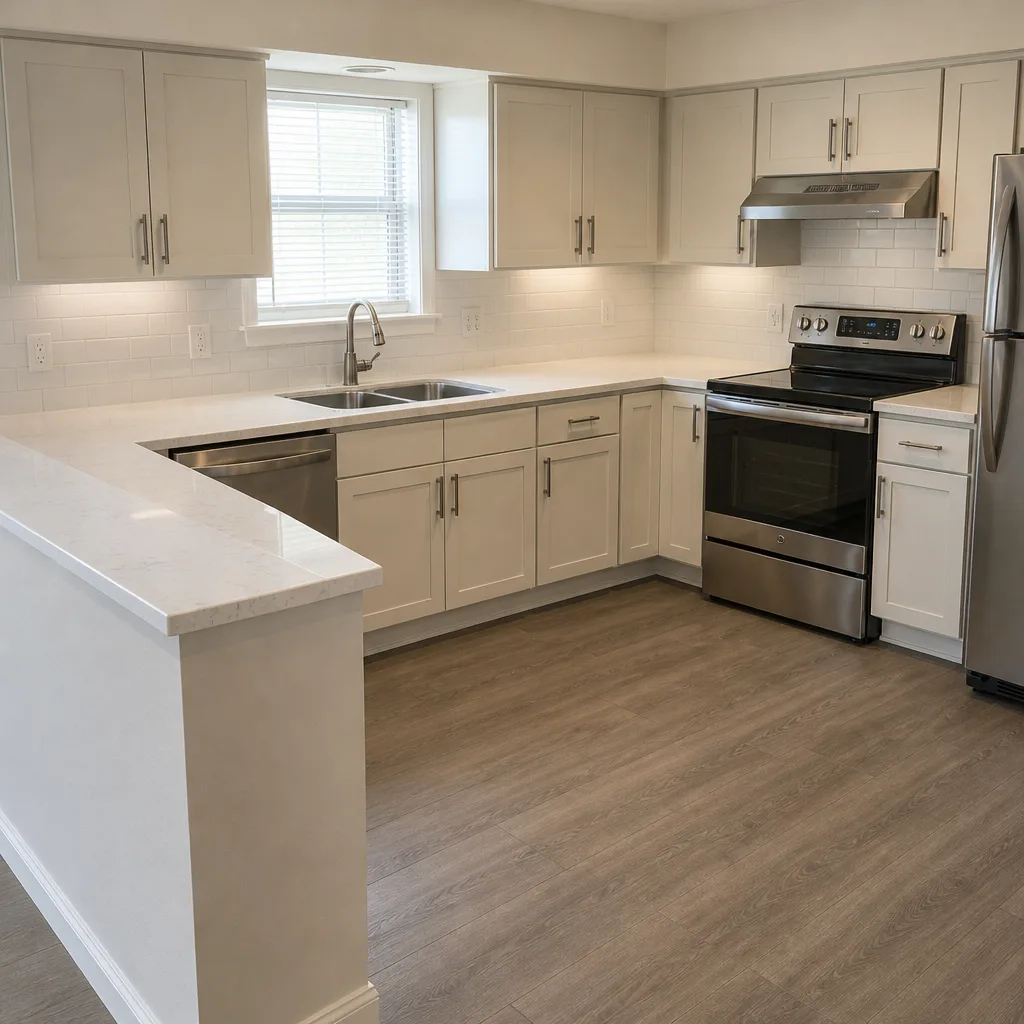 After
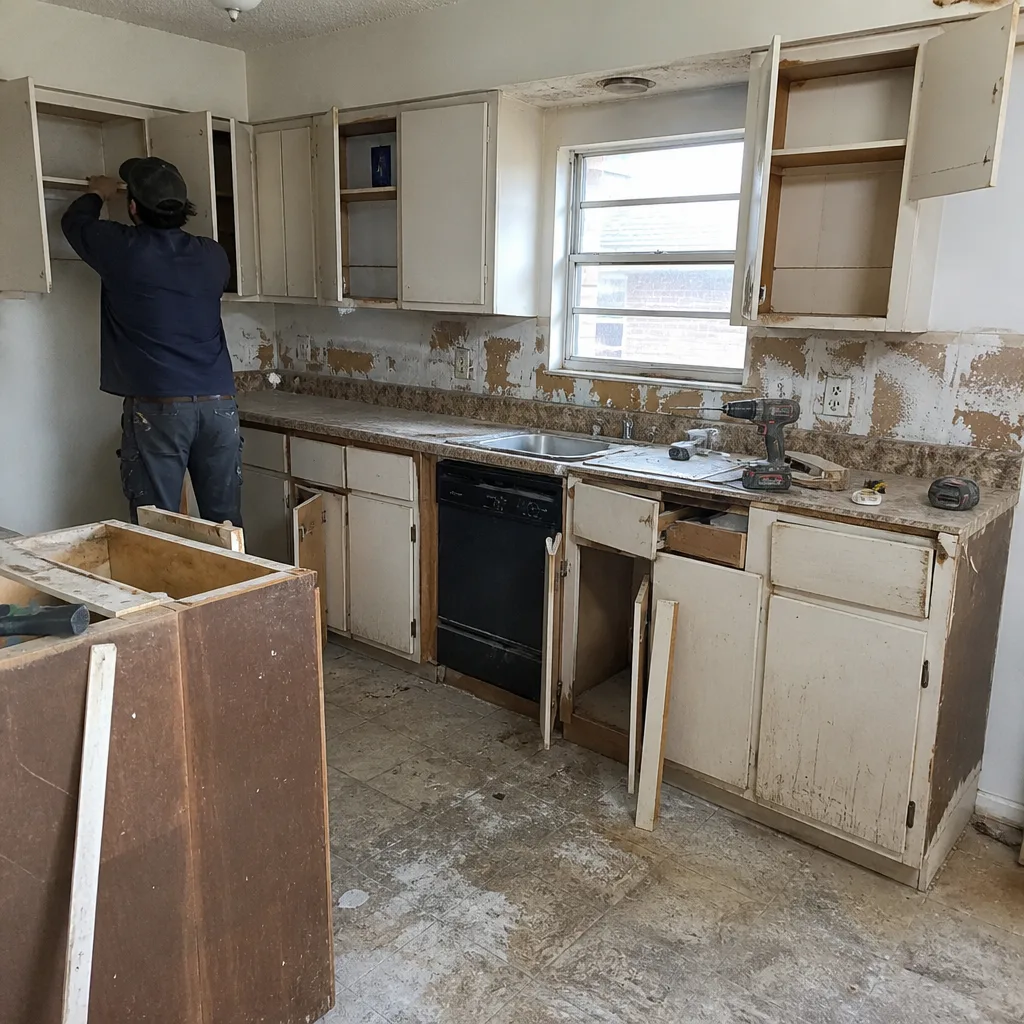 Before
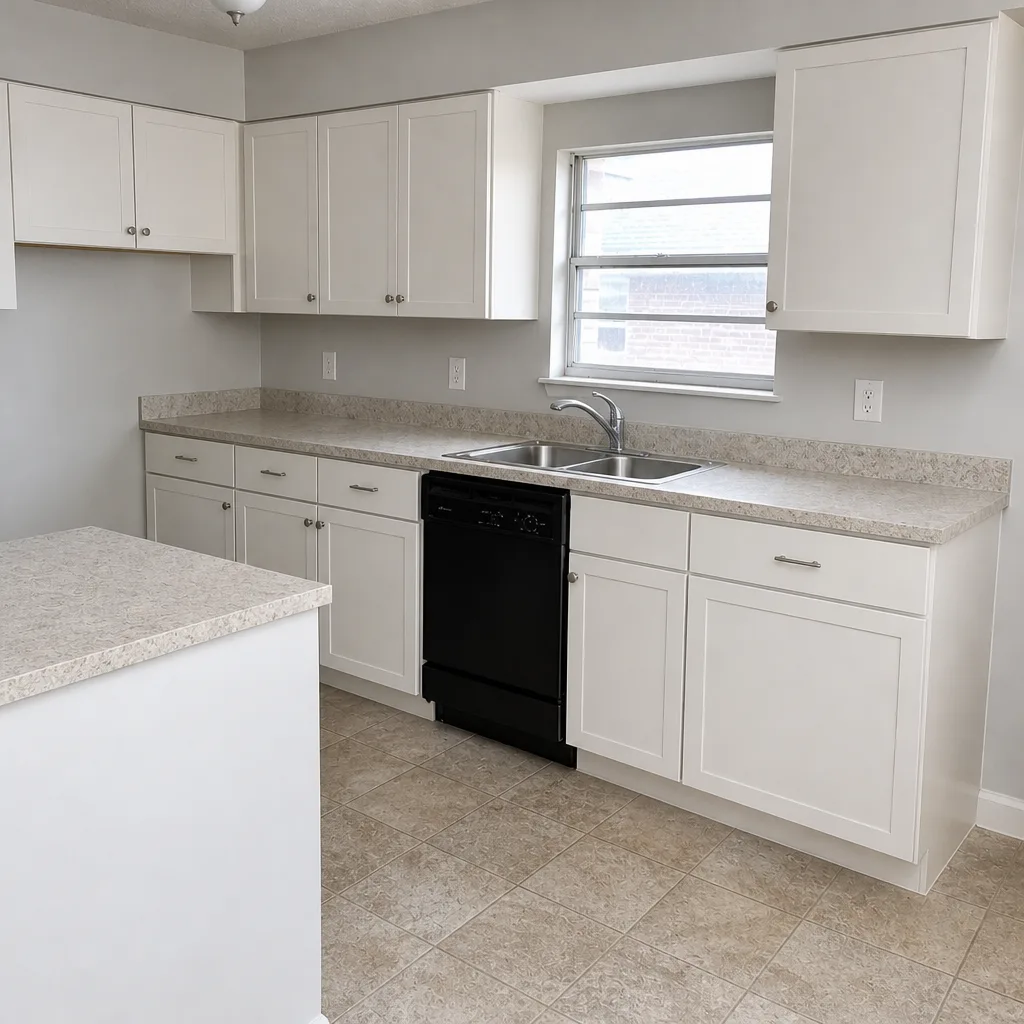 After
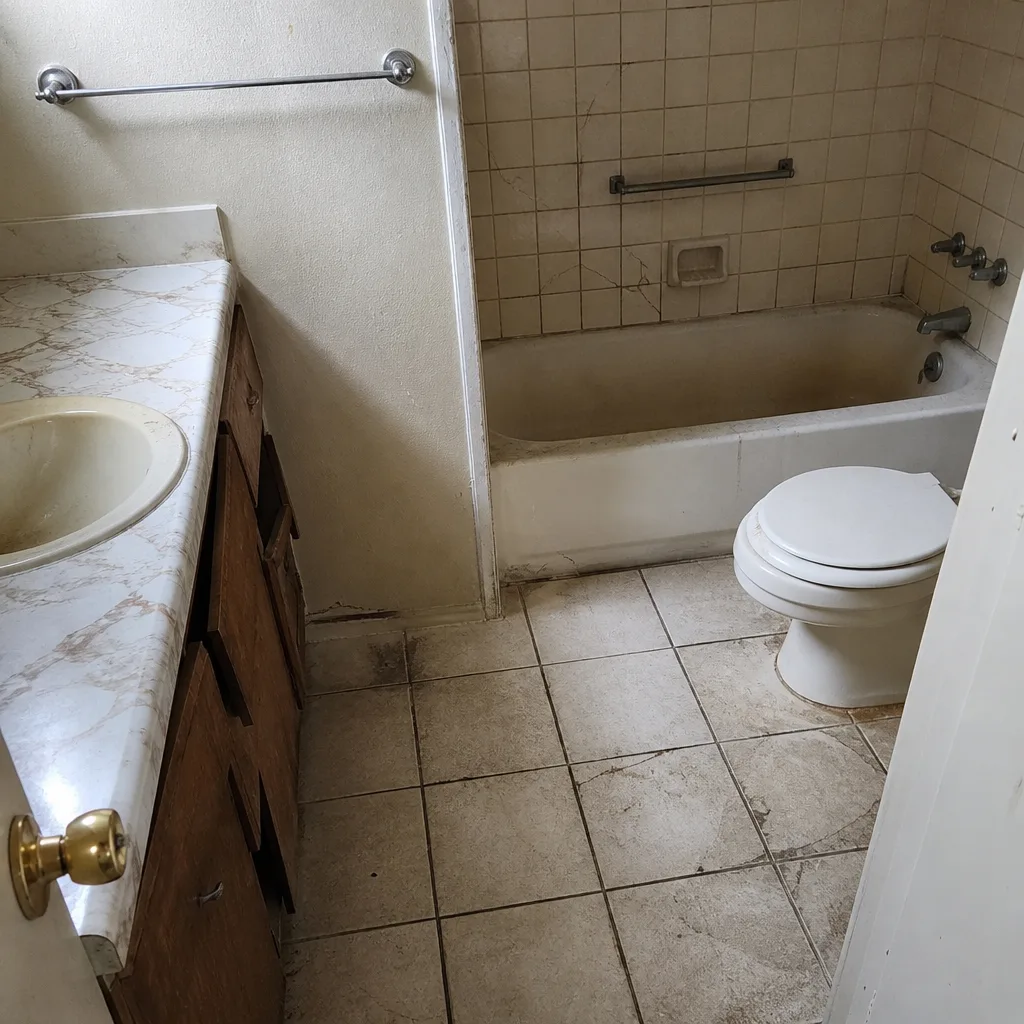 Before
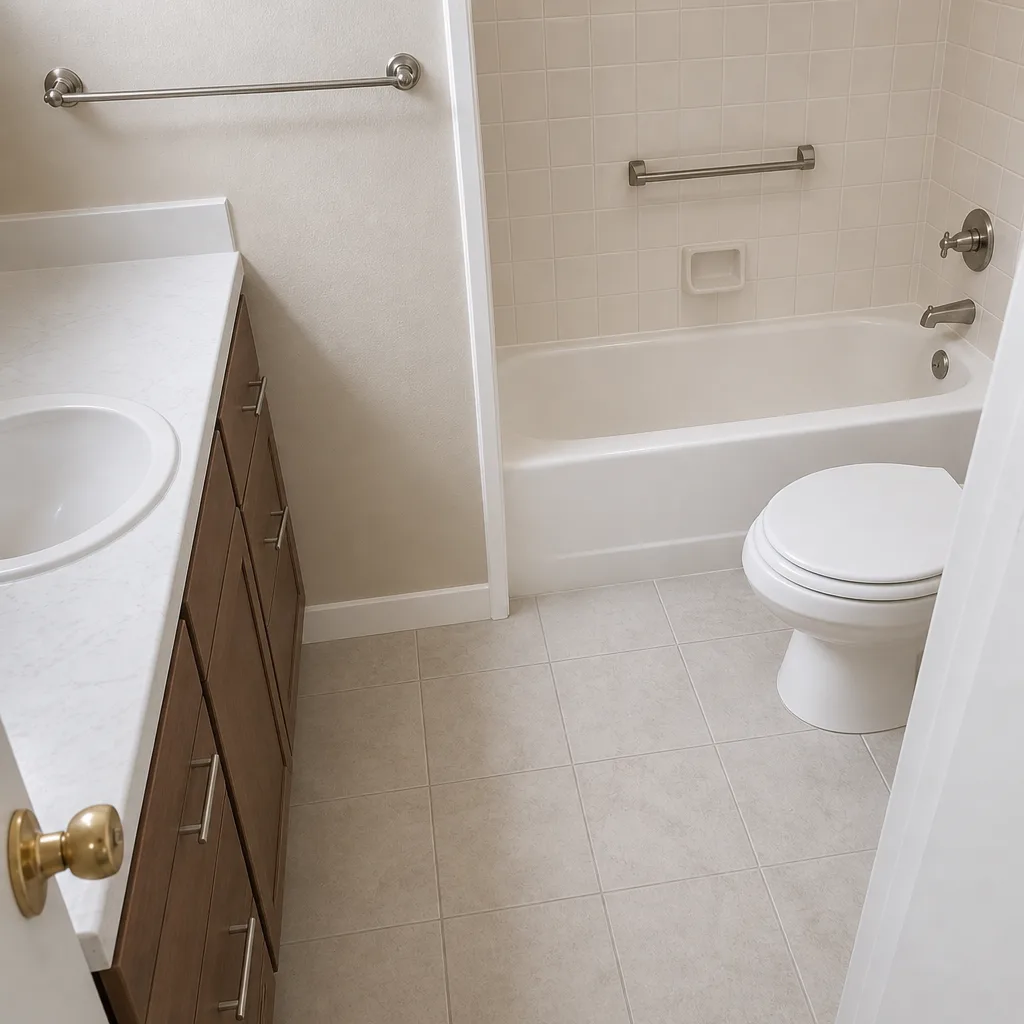 After
When to Call a Professional
Some jobs call for a trained pro, plain and simple. Anything that touches structure, electrical service or wiring, gas lines, or the roof at height should go to a licensed, insured professional, not a homeowner with a weekend and a how-to video. If your project requires plan review, changes a load-bearing wall, relocates plumbing, or adds circuits, get a professional evaluation before you buy a single material.
Bradford Remodeling Co McKinney offers free estimates in McKinney. Our technicians have up to 22 years of experience, and the local pro we connect you with is licensed and insured as the state requires. We give you a written price before any work starts, and every completed project is covered by the 365-Day Done Right Promise. Call (844) 834-0609 to schedule your free estimate.
Frequently Asked Questions

Kitchen remodels in McKinney typically run from roughly $25,000 to $75,000 depending on scope, layout changes, and material selection, while bathroom remodels commonly land between $12,000 and $35,000. Layout changes, permit requirements, and material tier drive the range. We put a line-item written price in front of you before work starts, so the number doesn’t move at the door. Call (844) 834-0609 for an exact quote.
Any work that changes structure, electrical, plumbing, or mechanical systems requires a permit; purely cosmetic work may not. Job classification matters, because plan-review jobs cost more time than over-the-counter permits. Verify the requirements with the City of McKinney before you rely on a contractor’s word. Call (844) 834-0609 and we’ll walk through what your scope requires.
Permit timelines in McKinney depend on review volume and whether your job needs full plan review or qualifies for an over-the-counter permit. Plan-review projects take longer because drawings are reviewed by multiple departments. Build review time into your schedule from the start rather than assuming a week. Call (844) 834-0609 to talk through realistic timing for your project.
Deed restrictions are recorded rules for a subdivision, enforced through the HOA or an architectural review committee, and they can be stricter than city code. Communities like Stonebridge Ranch and Craig Ranch often require material samples, color submissions, and committee approval before exterior work. You must satisfy both the city and the HOA, and the stricter rule controls. Call (844) 834-0609 and we’ll help you sort which approvals you need first.
Not with a written price in place. We put the scope and the price in writing before any work begins, and that’s what you’re held to. Change orders only happen when you approve a scope change, never as a surprise at the door. The 365-Day Done Right Promise backs the completed work for a full year. Call (844) 834-0609 for a written estimate.
Search your property address in the City of McKinney’s online permit portal, confirm the permit type matches the scope, check the status, and review the inspection history. Every required inspection should show as passed, and the contractor listed should be the one doing the work. If something doesn’t line up, ask before work continues. Call (844) 834-0609 if you want a second set of eyes.
The Bottom Line
Construction in McKinney runs on two tracks at once: the city’s permit and inspection system, and your subdivision’s deed restrictions, with the stricter rule controlling every time. Growth has made trade labor scarce and review queues long, so a realistic schedule matters as much as a fair price. Classify your job correctly, verify every permit yourself, and demand a written, line-item price before a tool comes out.
Bradford Remodeling Co McKinney gives you a written price before work starts, a live person on the phone 24/7, background-checked and uniformed technicians, and a full-year written guarantee on every completed project. Call (844) 834-0609 for a free estimate.
Written by the team at Bradford Remodeling Co McKinney.